Profitable pig production depends on getting finished pigs to market, with costs below market price.
Lowering mortality rates can improve potential profitability. However, experienced pig producers know that mortality is a cost — by its very nature and by efforts to reduce it.
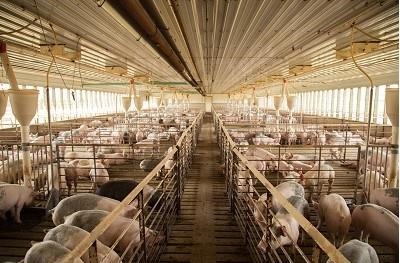
In a recent article in Ag Decision Maker, Russ Euken, swine specialist with Iowa State University Extension and Outreach, and Lee Schulz, extension livestock economist, take a look at some of the different factors that can affect the cost of mortality.
The article, titled “Assessing Economic Opportunity of Improving Mortality Rate in Wean-to-Finish Swine Production,” is based on a budget and gives examples of how mortality rate, market pig prices, feed prices and other factors impact the cost of mortality. Fixed costs are included in the budget but do not change with mortality rate. It is true that when a pig dies, an operation’s fixed costs are spread over fewer pigs, but total fixed costs have not changed.
Using the price assumptions and production inputs from the example outlined in the article, a 1% decrease in mortality would increase net profits by about $1 per head sold. Changing various assumptions, however, impacts results.
The cost of mortality depends on when mortality occurs. When a pig dies it stops consuming feed and other non-feed variable costs that accrue on a per-pig basis. This is cost savings. The cost savings when a pig dies also depends on feed costs. When feed prices are high, any cost savings is higher, especially if the pig dies early, compared to when feed prices are low. When a pig dies late in the finishing phase, the cost savings is comparatively minor relative to the lost opportunity cost of marketing a finished pig. Also evident is the decreasing marginal returns to cost savings as mortality rate decreases.
Producers are encouraged to use this information and the accompanying decision tool spreadsheet, which allows users to plug in their own numbers, so they can analyze what might happen if they improve mortality rates within their own operation.
“We want to help producers get a better handle on the economic opportunity of reducing swine mortalities,” said Euken. “Costs to reduce mortality may vary depending on cause of mortality, and so will the economic opportunity of prevention, but these new resources provide a starting point allowing producers to weigh the projected benefits of mortality-reducing strategies against their anticipated costs.”
Source : iastate.edu