To propel Midwest farming practices to the next generation of digital agriculture technologies, the National Science Foundation’s Cyber Physical Systems program and the USDA’s National Institute of Food and Agriculture (NIFA) recently awarded a 5-year, $7 million grant to researchers led by engineers from Iowa State University and the University of Illinois Urbana-Champaign.
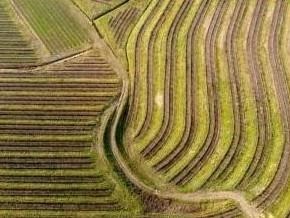
Aerial view of green field
The award launches the COALESCE—short for COntext Aware LEarning for Sustainable CybEr-agriculture systems—Cyber-Physical System, which will focus on operations of farm managing like sensing, modeling, and decision-making at the level of individual crops. In other words, by focusing on crop stressors at the individual levels, farmers can focus their resources and attention; thus, reducing the cost of labor, use of crop inputs such as herbicides and fertilizers, and water.
In addition, the System will allow small-scale farmers to be profitable while increasing safety and minimizing environmental impacts such as chemical runoff and soil compaction.
The project is a jointly funded Cyber-Physical Systems Frontier award, which includes researchers from the University of Arizona, Ohio State University, George Mason University, and the Iowa Soybean Association. The lead principal investigator is Soumik Sarkar, an associate professor of mechanical engineering at Iowa State University; and the principal investigator is Girish Chowdhary, an associate professor of agricultural and biological engineering and computer science at the University of Illinois.
The research team will share its findings with farmers by directly working with agricultural producer groups. Researchers also will share their discoveries through education and outreach plans designed to reach farm communities, next-generation scientists, and the public. The team will design activities and programs to encourage Native American, Hispanic, African-American and female students to study computing and engineering.
Another goal of this project is to attract the next generation of farmers, who will benefit from automated farming systems that eliminate repetitive tasks, reduce work with toxic materials, and require technical skills and knowledge that go beyond manual labor.
NIFA invests in and advances agricultural research, education, and Extension across the nation to make transformative discoveries that solve societal challenges. NIFA supports initiatives that ensure the long-term viability of agriculture and applies an integrated approach to ensure that groundbreaking discoveries in agriculture-related sciences and technologies reach the people who can put them into practice. In FY2020, NIFA’s total investment was $1.95 billion.
Source : usda.gov