By Lisa Hickey
Today is a new day in pest control. Do not let pest management consume your weekend and time. Pest management begins with recognizing the techniques available to control pests pressure. Integrated Pest Management (IPM) is the basic framework used to resolve when and how pests are controlled. IPM should be economically and ecologically feasible as possible. Pesticide application is only one IPM tool but most people turn to pesticides first. UF/IFAS IPM info
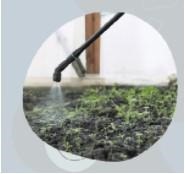
You have options: pesticides are one of several pest management tools.
What is IPM?
Let’s break down the important steps in IPM. Before we can determine how to control a pest, we must properly identify the pest. The pest can be a disease pathogen (fungi, bacteria, or viruses). Additionally, there are weed and animal pests. The animal group can be insects, mites, and both invertebrates and vertebrates. The wrong identity leads to the wrong treatment method.
Next, we look at the population level. Is the damage the pest is causing equal to the cost to control the pest? If it is, it is time to take action. This defines action threshold. However, when the cost of the damage by the pest or the cost to control the pest is higher than the other, we are now hitting our pocket, the money pocket. This is economic threshold. Sometimes pest pressure is not recognized until the pressure is at economic threshold level. A great example is spider mite infestation. We usually do not recognize the damage until we see the spider webbing. Scouting your landscape routinely (weekly) will reduce the chance of missing the spider mite infestation in the first place.
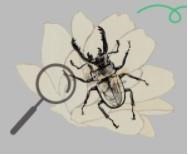
Properly identify the pest
IPM Techniques
Now, you may wonder what are the available techniques to control pest pressures. There are several techniques: biological, cultural, pesticide, and mechanical control, and host-plant resistance are a few techniques. IPM includes the rotation of the techniques as we control the pests. However, refer to these warnings.
- If you are using beneficial insects (biological control) to deal with a pest insect and you are also using an insecticide, the beneficial insect will be killed too.
- Meet the cultural demands of a plant first in order to reduce pest pressures. A plant in the wrong lighting or soil type, or receiving insufficient water or fertilizer, will emit stress pheromones. This is a signal for the pest!
- Genetics or host-plant resistance techniques can be powerful tools. Selecting strong genetics or genes that resist pest pressure are a pesticide free approach to controlling pest.
- Mowing, hoeing and plowing are mechanical ways to control weeds without ever spraying an herbicide.
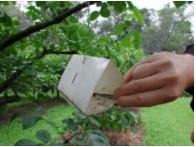
Scout and monitor pest populations.
Stop Pesticide Resistance!
Check out these links to understand pesticide resistance based on modes of action. Everyone applies pesticides, sometimes inside our homes, but mostly, outside our homes. When outside and trying to control a pest, consider more than pesticides. Use several IPM techniques and reduce impacts to the environment.
Herbicide resistance Fungicide resistance Insecticide resistance
Lisa Hickey is the Sustainable Food Systems Extension Agent who works with commercial fruit and vegetable producers, teaches IPM, pesticide CEU workshops, and pesticide examination prep classes. You may call 941-722-4524 ext. 1817 or email Lisa.Hickey@ufl.edu with your pesticide or IPM questions.
Source : ufl.edu