Farms.com Home   News

Several Factors are Driving Strong Cull Cow Markets

By Dr. Kenny Burdine

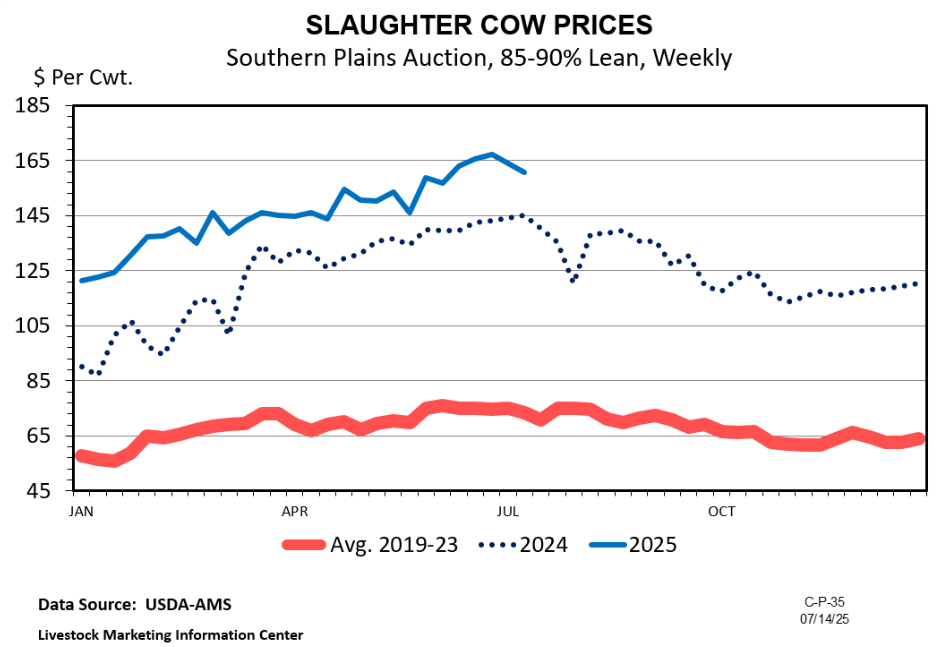
Cattle markets have been impressive across the board in 2025, and cull cow markets have been no exception. The monthly average price for 80-85% average dress boning cows in Kentucky set a record in June and may set a new record in July. June 2025 prices were 16% higher than June of 2024 and 62% higher than June of 2023. This is a trend across all regions of the US as demand remains strong and cull cow supplies remain tight. I want to briefly discuss some specific factors behind these prices levels.
Crops

The most obvious reason for the extremely high cull cow prices has been sharp reductions in slaughter levels. As I write this in late July, beef cow slaughter is down 17% year-to-date from 2024. If this trend continued through the end of 2025, it would represent a reduction in beef cow slaughter of more than 450,000 cows. The beef cow herd was culled hard from 2021 to 2023, so it is likely that a lot of poor performers had already exited the herd. And of course, the current calf market is encouraging producers to hold on to cows a bit longer than usual. It is also worth pointing out that dairy cow slaughter is down 7% for the year, which is also contributing to the tight supplies.

Source : osu.edu

Trending Video

Advancing Swine Disease Traceability: USDA's No-Cost RFID Tag Program for Market Channels

Video: Advancing Swine Disease Traceability: USDA's No-Cost RFID Tag Program for Market Channels

On-demand webinar, hosted by the Meat Institute, experts from the USDA, National Pork Board (NPB) and Merck Animal Health introduced the no-cost 840 RFID tag program—a five-year initiative supported through African swine fever (ASF) preparedness efforts. Beginning in Fall 2025, eligible sow producers, exhibition swine owners and State Animal Health Officials can order USDA-funded RFID tags through Merck A2025-10_nimal Health.

NPB staff also highlighted an additional initiative, funded by USDA Animal and Plant Health Inspection Service (APHIS) Veterinary Services through NPB, that helps reduce the cost of transitioning to RFID tags across the swine industry and strengthens national traceability efforts.

Topics Covered:

•USDA’s RFID tag initiative background and current traceability practices

•How to access and order no-cost 840 RFID tags

•Equipment support for tag readers and panels

•Implementation timelines for market and cull sow channels How RFID improves ASF preparedness an