By Adam Varenhorst
Soybean gall midge larvae have been detected in soybean in southeastern South Dakota (Figure 1). Similar to what was observed in 2021, many of the infested fields are not showing obvious signs of infestation, and larvae are only found after numerous soybeans are dissected. In addition, most of the plants that are infested have relatively low numbers of larvae present. In some fields, we are observing some plants that have started to wilt within the row (Figure 2). These plants are typically infested, but the number of wilted plants at this point is much lower than what was observed in previous years.
For most of the fields that have been scouted, infested soybean at this point, even on the edges of the field, are still green and lush. The only indication of an infestation is the discoloration of the epidermis near the base of the stem (Figure 3). Although the infestations probably won’t result in the death of the plants in many of the fields in 2022, infested fields will be a source for soybean gall midge adults in 2023.
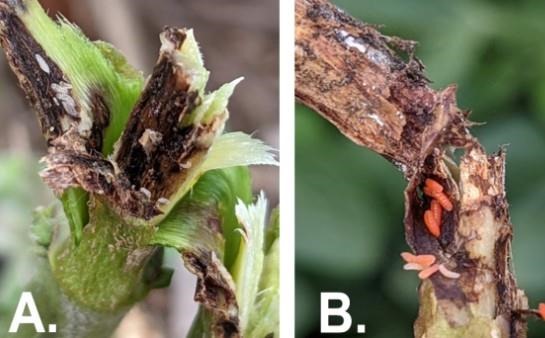
Figure 1. A) Early instar soybean gall midge under epidermis. B) Late instar soybean gall midge under epidermis.
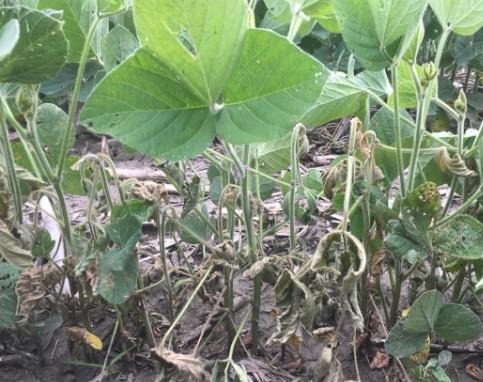
Figure 2. Wilting soybean that are infested with soybean gall midge larvae.
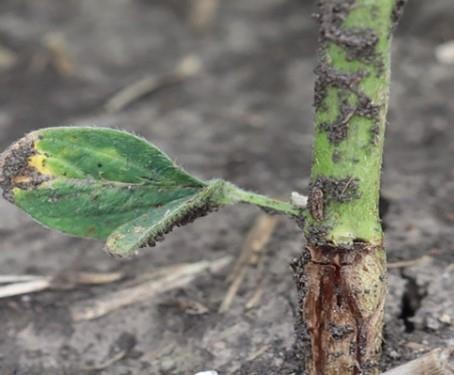
Figure 3. Soybean stem with slight swelling and discoloration near the soil surface.
Source : sdstate.edu