Did you know a collision with farm equipment is about five times more likely to produce a fatality than any other type of motor vehicle accident? As soybean planting is now in full swing, Chip Petrea, University of Illinois agriculture safety and health researcher, advises farmers to follow these four steps to safety.
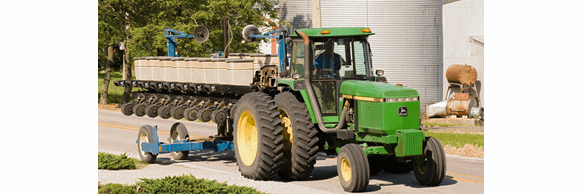
1. Ensure machinery is properly equipped
Whether it is new or old, large or small, your equipment must be equipped with the proper slow-moving vehicle identifiers that meet the road regulations in your state. If your equipment does not currently have the proper identifiers, Petrea advises the purchase of reflective tape and/or portable lights that can be easily added onto your machinery. Ask your county police department for road regulations for your state to ensure you are taking the proper steps for your safety and for others.
2. Travel in pairs
Even with proper identification, having a regular motor vehicle with flashing hazard lights follow directly behind your equipment on the road is an encouraged safe practice, says Petrea. Following at a safe distance behind will allow additional reaction time for other drivers to recognize the slow-moving vehicle and reduce speed as necessary.
3. Avoid driving while fatigued
Effects of the long, late hours spent in the field this season can cause extreme fatigue and even disorientation. A recent sleep study found that people who had only six hours of sleep each night over the course of two weeks had the same reaction time as a person who is legally drunk. With farmers seeing little sleep this time of year – even less than six hours in some cases – those delayed reactions could put yourself or others in jeopardy.
4. Trust drivers with experience
When determining who best to operate farm equipment on the road, designate the individual with the most experience behind the wheel.
Click here to see more...