Farms.com Home   News

Thin Stands Often Better Than Reseeding


Thin Stands Often Better Than Reseeding

What if a grower calibrated wrong and seeded at 3 pounds/acre instead of 5 pounds as intended? If that seed had a thousand kernel weight (TKW) of 5 grams, the actual number of surviving plants per square foot could be lower than the minimum 4-5 plants required for canola to reach its yield potential. Click here to see how important it is to recalibrate when switching crops or varieties.

Should the grower reseed?


Not likely. This thin stand is not optimal for yield (see the graph below) but a thin stand at the end of May has better yield and quality potential than the alternative, which is reseeding.

The key is to protect those few plants. Thresholds for everything are lower with a thin stand. Watch closely for insects and consider spraying for flea beetles when damage is only 20%. Keep weed competition to a minimum. And know that the large bushy plants that this crop produces will have wider windows of susceptibility for sclerotinia. If the risk is high, a split application of fungicide may be warranted because the flowering period will be longer.

If growers know immediately that they made a mistake with the seeding rate, they could try to overseed to bump the rate. But if the mistake is not known for a couple days, just leave the crop, assess it as it emerges, and manage accordingly. Don’t try to overseed because it could damage germinated seedlings and create a multi-stage crop that presents management challenges all season long.
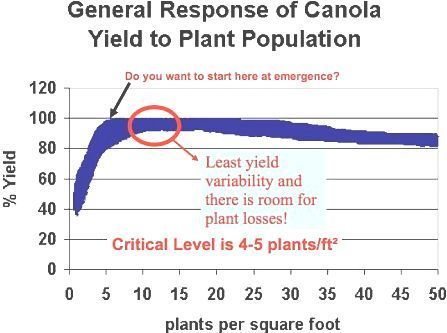


Source: Canola Council of Canada


Trending Video

Why Port Infrastructure is Key to Growing Canada's Farms and Economy

Video: Why Port Infrastructure is Key to Growing Canada's Farms and Economy

Grain Farmers of Ontario (GFO) knows that strong, modern port infrastructure is vital to the success of Canada’s agriculture. When our ports grow, Ontario grain farmers and Canadian farms grow too—and when we grow, Canada grows.

In this video, we highlight the importance of investing in port infrastructure and how these investments are key to growing Ontario agriculture and supporting global trade. The footage showcases the strength of both Ontario’s farming landscapes and vital port operations, including some key visuals from HOPA Ports, which we are grateful to use in this project.

Ontario’s grain farmers rely on efficient, sustainable ports and seaway systems to move grain to markets around the world. Port investments are crucial to increasing market access, driving economic growth, and ensuring food security for all Canadians.

Why Port Infrastructure Matters:

Investing in Ports = Investing in Farms: Modernized ports support the export of Canadian grain, driving growth in agriculture.

Sustainable Growth: Learn how stronger ports reduce environmental impact while boosting economic stability.

Global Trade Opportunities: Improved port and seaway systems help farmers access new global markets for their grain.

Stronger Communities: Investment in ports means more stable jobs and economic growth for rural communities across Ontario and Canada.

We are proud to support the ongoing investment in port infrastructure and to shine a light on its vital role in feeding the world and securing a prosperous future for Canadian agriculture.

Special thanks to HOPA Ports for providing some of the stunning port footage featured in this video.