Farms.com Home   News

U.S. Wheat Exports Rebound in 2024/25 Thanks to Increased Production and Price Competitiveness

Farmers are already prepping their combines for harvest by the time the wheat marketing year ends on May 31, but a look back shares the story of the commitment of U.S. farm families and the industries that support them to keeping the U.S. wheat store open for the world’s buyers.

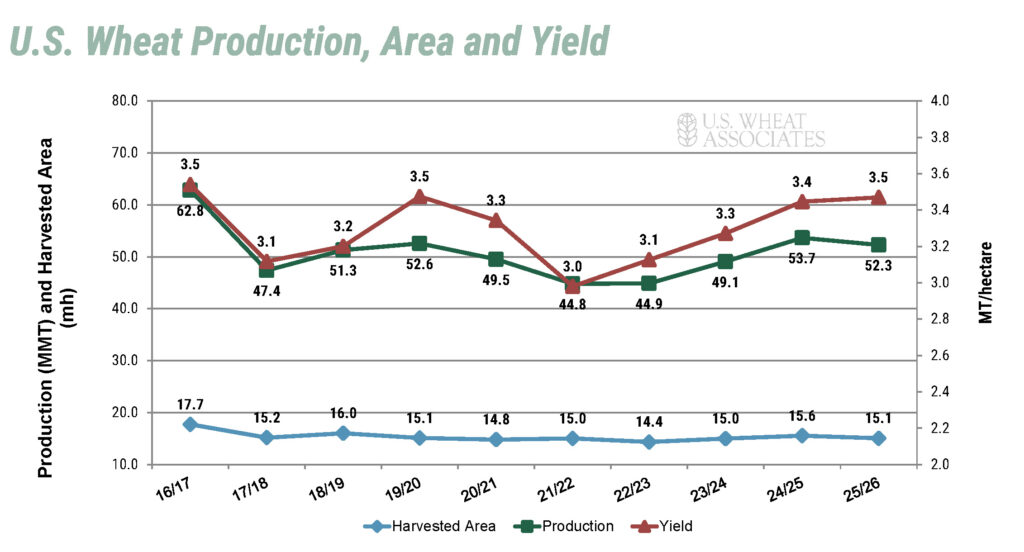
The 2024/2025 marketing year (June 1, 2024-May 31, 2025) realized a rebound in U.S. wheat exports, driven largely by recovery in U.S. wheat production and competitive pricing. Overall, total U.S. wheat exports increased nearly 16% year-over-year to 820 million bushels (22.3 million metric tons), according to USDA’s June 2025 World Agricultural Supply and Demand Estimates (WASDE) report.

Significantly, this increase was achieved despite China being relatively absent from the U.S. and global wheat market this past marketing year. The Chinese government limited wheat imports to protect its domestic producers, resulting in roughly 147 million bushels (4.0 MMT) imported from all origins, a sharp 70% decrease from the prior year.
crop

Click here to see more...

Trending Video

R3 Corn Growth Stage Explained: Why Late-Season Tissue Sampling Matters

Video: R3 Corn Growth Stage Explained: Why Late-Season Tissue Sampling Matters

Corn pollination may be behind us, but the work isn't over.

In this field update from the Nutrien Innovation Farm in Champaign, Illinois, agronomist Tim Sickman discusses why growers should stay engaged with field scouting during the R3 (milk) stage of corn development. While favorable weather, strong pollination, and early grain fill are encouraging signs, important questions about crop nutrition and yield potential still remain.

Tim explains: What the R3 corn growth stage looks like

Why successful pollination isn't the finish line

The importance of late-season field scouting

How tissue sampling can identify nutrient deficiencies

The role of sulfur, zinc, potassium, and other nutrients during grain fill

Using tissue analysis to improve future fertility management plans

As corn moves through grain fill, understanding nutrient availability and plant health can provide valuable insights for maximizing yield potential and planning for next season.