Farms.com Home   News

Unique Structure Of African Swine Fever Virus Enzyme May Allow Drug Development

A DNA-copying protein from a lethal pig virus has a unique structure that may offer a target for drugs designed to combat this important agricultural disease, according to a study publishing February 28th in the open-access journal PLOS Biology by Yiqing Chen and colleagues at Fudan University in Shanghai, China.
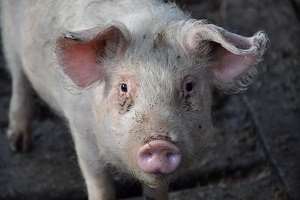


African swine fever virus (ASFV) is a highly contagious and deadly disease in pigs that has spread from Africa to areas of Europe and Asia. Currently there are no treatments, and control relies on killing entire herds once infection is detected. Viral replication depends in part on a polymerase enzyme, AsfvPolX, that repairs breaks in the DNA, but the structure of this enzyme has not been determined in detail. Here, the authors used X-ray diffraction and nuclear magnetic resonance to solve the structure at atomic resolution.
 

Click here to see more...

Trending Video

Evolution of Beef Cattle Farming

Video: Evolution of Beef Cattle Farming

The Clear Conversations podcast took to the road for a special episode recorded in Nashville during CattleCon, bringing listeners straight into the heart of the cattle industry. Host Tracy Sellers welcomed rancher Steve Wooten of Beatty Canyon Ranch in Colorado for a wide-ranging discussion that blended family history and sustainability, particularly as it relates to the future of beef production.

Sustainability emerged as a central theme of the conversation, a word that Wooten acknowledges can mean very different things depending on who you ask. For him, sustainability starts with the soil. Healthy soil produces healthy grass, which supports efficient cattle capable of producing year after year with minimal external inputs. It’s an approach that equally considers vegetation, animal efficiency, and long-term profitability.

That philosophy aligned naturally with Wooten’s involvement in the U.S. Roundtable for Sustainable Beef, where he served as a representative for the Colorado Cattlemen’s Association. The roundtable brings together the entire beef supply chain—from producers to retailers—along with universities, NGOs, and allied industries. Its goal is not regulation, Wooten emphasized, but collaboration, shared learning, and continuous improvement.