By Andrea Albertin
The Clean Waterways Act, also known as SB 712, was signed into Florida law on June 30, 2020. The goal of the law is to protect Florida’s water resources; the law focuses on minimizing the impact of nutrient pollution sources and strengthening regulatory requirements. These sources include septic systems, stormwater runoff, wastewater treatment plants, as well as fertilizer used in agricultural production. I wanted to provide a brief update on how actions outlined within the act are moving forward.
Agricultural Operations
The act affects all landowners and producers enrolled in the Florida Department of Agriculture and Consumer Services (FDACS) Best Management Practices (BMP) Program, regardless of whether or not the enrolled operation is in an area with a Basin Management Action Plan (BMAP).
FDACS field staff are coordinating site visits (Implementation Verification) every two years with producers in the BMP Program to ensure proper implementation of BMPs.
- During an Implementation Verification (IV) visit, FDACS field staff review records that producers are required to keep under the BMP program. Example record keeping forms are found near the back of every BMP Commodity Manual. Electronic copies of all manuals are located on the FDACS Best Management Practices web page in the in the ‘BMP Rules, Manuals and Brochures’ drop-down section.
- In addition to this record-keeping review, producers are required to submit to field staff a record of all nitrogen and phosphorus applied on their enrolled operation during the previous 2 years. FDACS has created a specific form, the Nutrient Application Record Keeping Form or NARF where producers will record quantities of N and P applied. FDACS field staff will retain a copy of the NARF during the IV visit.
- The copy of the NARF that field staff retain is protected under the public records exemption (Section 403.067 Florida Statutes). In BMAP areas, like the Jackson Blue Springs Basin in the Panhandle, FDACS will combine the nitrogen and phosphorus application data from all producers and enrolled properties (total pounds of N and P applied within the BMAP area), and will send that information to FDEP.
FDACS’ SB 712 Frequently Asked Questions (FAQ) provides more detailed answers to questions about site visits, record keeping, the NARF, why FDACS is collecting nutrient records, and what will be done with this information.
As always, your best source of information about the FDACS BMP Program, requirements under the Clean Waterways Act, and available cost-share opportunities to implement BMPs are the FDACS-OAWP field staff in your area.
The USDA-Natural Resources Conservation Service (NRCS) and the Water Management Districts (WMDs) also offer cost share funds to defer the cost of implementing BMPs. Contact your local NRCS field staff, and the Northwest Florida WMD Agriculture Program or the Suwannee River WMD Agricultural Cost Share Program for more information on their available programs.
Septic Systems and Stormwater Management
Other major provisions in the Clean Waterways Act include (but are not limited to) reducing nutrient inputs from septic systems and stormwater runoff.
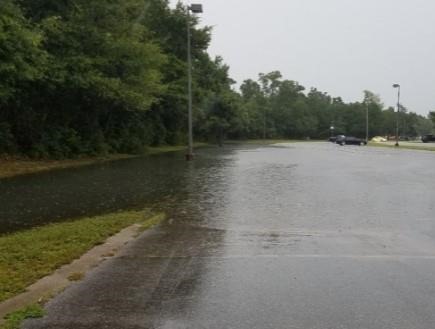
Stormwater runoff can carry nutrients and other pollutants to surface waterbodies. Photo credit: M. Deitch, UF WFREC
To reduce the impacts of stormwater runoff, the Florida Department of Environmental Protection (DEP) and the water management districts (WMDs) were directed to update stormwater design to improve nutrient removal and to update operation regulations. As part of this, they created a Stormwater Rulemaking Technical Advisory Committee with representatives from various stakeholder groups. They will provide provide input to DEP and the WMDs during the rule-making process.
To reduce septic system nutrient impacts,
- Oversight of septic system program (known as the Onsite Sewage Treatment and Disposal or OSTDS Program) was transferred from the Department of Health (DOH) to DEP.
- At the state level, the OSTDS program office transferred to DEP. But, it’s important to note that county level OSTDS programs stayed at the county DOH offices. So, your local county health department is still the go-to place for information on septic systems and permitting.
- An OSTDS Technical Advisory Committee was established with members from various stakeholder groups. They are developing recommendations about the physical location of OSTDS (such as appropriate setback distances from surface waterbodies, groundwater, and wells) and the marketplace availability and use of Enhanced Nutrient Reducing (ENR) technology.
Source : ufl.edu