Farms.com Home   News

US Department Of Energy Funds Sorghum Research On Drought Tolerance And Nitrogen Usage

The U.S. Department of Energy (DOE) has announced a second major investment into sorghum research. Drought tolerance and nitrogen usage and their microbiological interactions with sorghum plants will be the focus of the two projects funded.
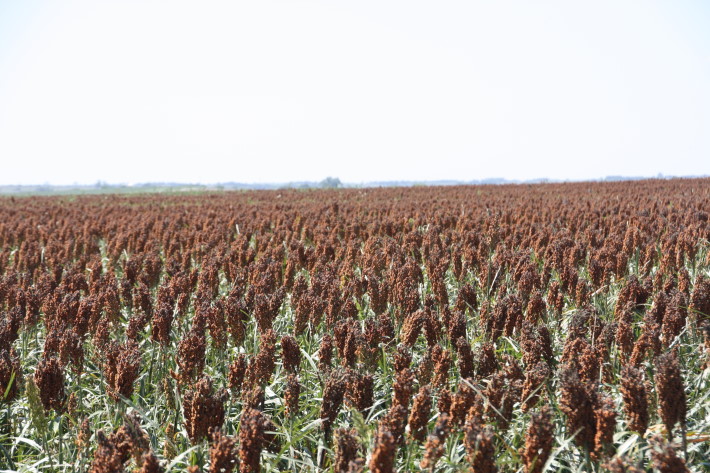
US Department of Energy Funds Sorghum Research on Drought Tolerance and Nitrogen Usage


Thirteen institutions have teamed up for the two projects. The University of California, Berkeley, will lead the $12.3 million effort on drought tolerance, and the University of Nebraska, Lincoln, will lead the $13.5 million effort on nitrogen usage.

“The DOE has shown incredible vision in their commitment to sorghum,” said Sorghum Checkoff CEO Tim Lust. “Sorghum producers need innovative and longer-term investments in their crop, and DOE has been a great partner in this.”

This announcement marks the second time in the past six months the DOE has committed to investing significantly in sorghum, bringing the agency’s total commitment to the crop during this time to $55.8 million.

Click here to see more...

Trending Video

Evolution of Beef Cattle Farming

Video: Evolution of Beef Cattle Farming

The Clear Conversations podcast took to the road for a special episode recorded in Nashville during CattleCon, bringing listeners straight into the heart of the cattle industry. Host Tracy Sellers welcomed rancher Steve Wooten of Beatty Canyon Ranch in Colorado for a wide-ranging discussion that blended family history and sustainability, particularly as it relates to the future of beef production.

Sustainability emerged as a central theme of the conversation, a word that Wooten acknowledges can mean very different things depending on who you ask. For him, sustainability starts with the soil. Healthy soil produces healthy grass, which supports efficient cattle capable of producing year after year with minimal external inputs. It’s an approach that equally considers vegetation, animal efficiency, and long-term profitability.

That philosophy aligned naturally with Wooten’s involvement in the U.S. Roundtable for Sustainable Beef, where he served as a representative for the Colorado Cattlemen’s Association. The roundtable brings together the entire beef supply chain—from producers to retailers—along with universities, NGOs, and allied industries. Its goal is not regulation, Wooten emphasized, but collaboration, shared learning, and continuous improvement.