Farms.com Home   News

Use Pesticides and Fertilizers Safely

Let’s strive for no-pesticide landscapes in 2021!
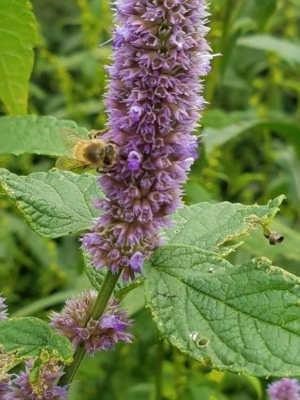
no-pesticide landscapes

We always advise using the strategies of integrated pest management (IPM) such as:

  • planting the right plant in the right place,
  • scouting and identifying pests,
  • determining if damage is cosmetic or life-threatening,
  • good sanitation, and
  • caring for plants properly.

However, there are some cases where pesticides become necessary, especially in the case of managing noxious weeds or when there is potential for significant plants or crop loss due to a pest infestation. 

You can apply some pesticide products and fertilizers yourself or hire a professional. If you are taking it on yourself, the Minnesota Department of Agriculture (MDA) and UMN Extension urge everyone to use pesticides and fertilizers safely.

Start by reading and following all label directions. Labels explain how to use the product safely and most effectively. In Minnesota, it is illegal to apply products without following the label directions. The label is the law.

Hire a professional

State law requires professional companies and applicators to be licensed by the MDA in order to commercially apply pesticides and fertilizers, including weed and feed products. Applicators must recertify their licenses every two years. MDA and Extension Pesticide Safety and Environmental Education (PSEE) develop and offer continuing education for licensed applicators so that their knowledge is up to date and to assure that they understand and follow state and federal regulations.

If you hire a professional, check their license, be wary of unrealistic claims, and be aware of posted warning flags indicating chemical treatment. 

If you apply products yourself

MDA recommends

  • Get a soil test.
  • Read and follow pesticide label directions.
  • Avoid application on windy days or in heavy rain.
Source : umn.edu

Trending Video

Turning Plant Defense Into a Management Strategy

Video: Turning Plant Defense Into a Management Strategy

Turning Plant Defense Into a Management Strategy

Understanding how a plant responds to stress is one thing.

Using that knowledge to make better management decisions is another.

Systemic acquired resistance, or SAR, is the plant's more direct defense response. When stress or infection occurs, the plant begins signaling throughout its system and preparing defensive compounds.

But if we know that response exists, can we help prepare the plant before the stress arrives?

The answer starts with understanding what triggers the response and what the plant needs to carry it out.

The Trigger and the Fuel

Salicylic acid plays an important role in triggering the SAR pathway.

Think of it as turning the truck on.

The engine may be running, but it still needs fuel to do the work.

In this case, manganese plays an important role in supporting the enzyme systems involved in the plant's defensive response.

This makes manganese status an important part of the conversation. Whether a producer is using tissue testing, sap analysis, or simply scouting for visible deficiency symptoms, the goal is to make sure the plant has adequate manganese available.

Manganese is required in relatively small amounts, but that does not make its role small.

If the plant receives a signal to defend itself but lacks the nutrition needed to support that response, it may struggle to carry out the process efficiently.

The trigger matters.

The fuel matters too.

Prepare Before the Stress Arrives

The best time to think about stress management is before the plant is overwhelmed.

Once a crop is already struggling, management can quickly turn into a game of catch-up.

This is similar to nitrogen management. Once a plant becomes severely deficient, correcting the problem does not necessarily erase the time and yield potential already lost.

Plant defense can work the same way.

Low-rate, targeted approaches designed to support the SAR pathway may fit best ahead of an expected stress event rather than after significant damage has already occurred.

That requires producers to think about predictable stress.

We may not know exactly what the weather will do tomorrow, but we generally know summer heat is coming. We know certain field conditions increase disease pressure. We know a herbicide application can temporarily stress a crop as the plant processes the chemistry.

Even a properly timed and labeled herbicide application can create a temporary response in the plant.

That does not mean the herbicide is bad.

Weeds can create significantly more yield loss than the temporary stress caused by controlling them.

The question is not whether we should eliminate every stressor.

The question is whether we can better prepare the plant to manage necessary and predictable stress.

Not All Stress Is Bad

Stress is a normal part of plant growth.

A perfectly stress-free environment does not exist in the field.

In fact, some stress is necessary for normal plant development. A plant responds to wind, temperature, moisture, sunlight, and countless other environmental signals throughout the season.

The environment is stress.

The plant's job is to manage it.

Problems begin when the stress load becomes greater than the plant's ability to respond.

Extreme heat, drought, high salt concentrations, disease pressure, and even certain management practices can add to that load.

This is where understanding SAR becomes useful.

Instead of waiting until the plant is visibly struggling, producers can begin identifying periods when stress is likely and make management decisions around those windows.

ISR Starts With the Soil

While SAR is a more direct defense response, induced systemic resistance, or ISR, brings the conversation back to soil health.

The longevity of a farm is closely connected to the health of its soil.

Carbon plays a major role because it supports biological life within the soil. Bacteria, fungi, and other organisms interact with plant roots and influence how the plant grows, accesses nutrients, and prepares for stress.

This is why soil health cannot be reduced to one product or one application.

It is a system.

Keeping living plants in the field longer can support biological activity. Cover crops may fit some operations. Better water management can improve soil conditions.