By Pam Knox
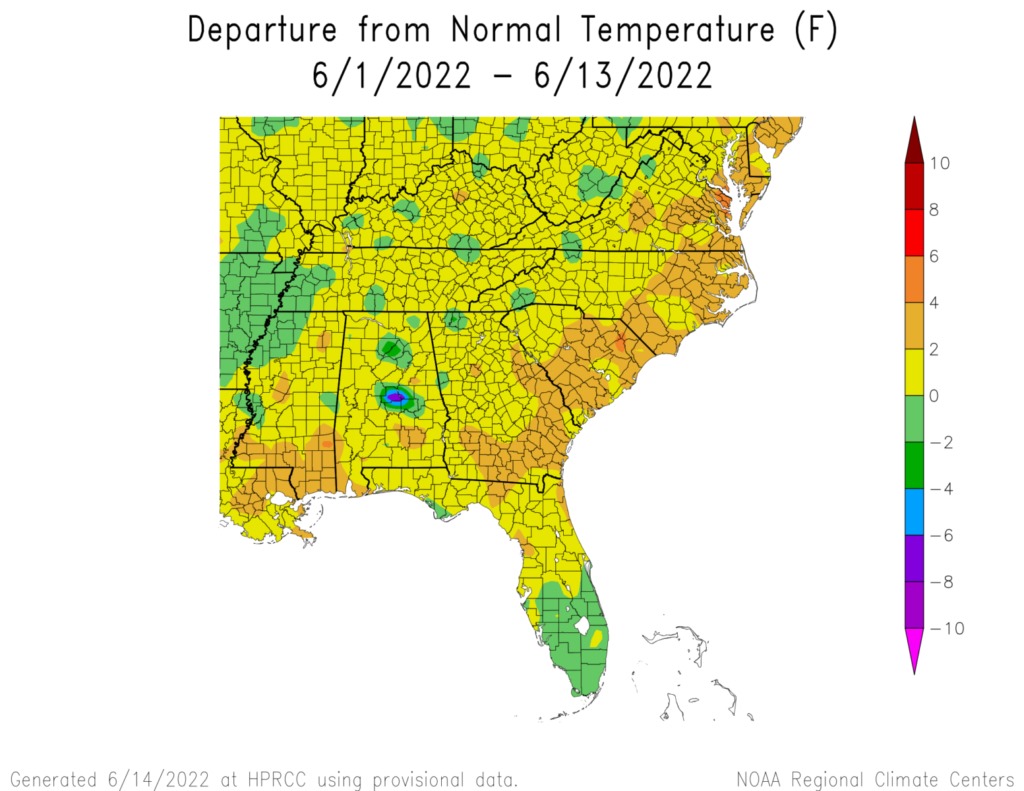
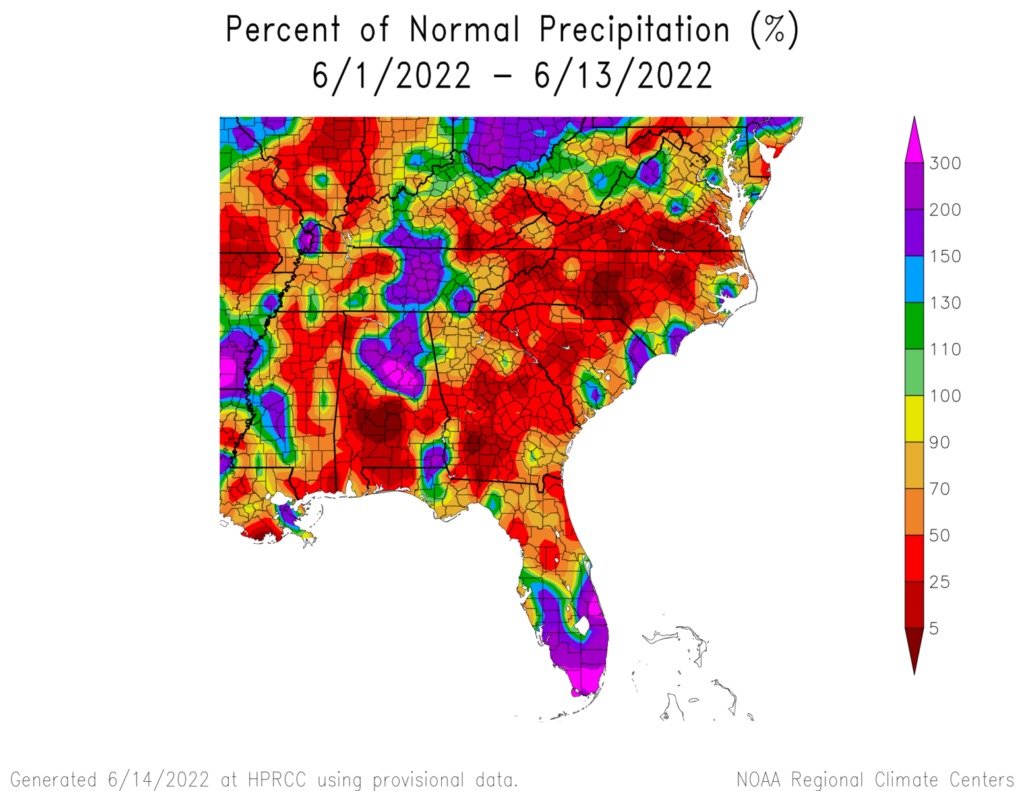
It’s halfway through June, so let’s take a quick look at the climate conditions so far. Temperatures have been warmer than normal across most of the region, and so far, it looks like things could get even hotter next week, so June as a whole is likely to be above normal in temperature just based on what we have seen so far and what we expect soon. Precipitation has been much less than normal in most parts of the Southeast except for southern Florida, with many areas receiving less than 50 percent of what would be expected so far this month. Of course, this does not include today’s rain, but it was quick and scattered in most locations, so I don’t expect to see it make a big difference.
Looking ahead, most parts of the Southeast with the exception of Florida are expected to receive an inch or less of rainfall by the end of June. This will likely cause a significant increase in drought conditions and add stress to many crops, especially dryland fields. The tropics are not very active right now, so we can’t expect much relief from a tropical storm, although there is a chance of something developing in the southern Caribbean in the next week. If something does develop, it is not expected right now to cause any impact in the Southeast, although that could change.
Source : uga.edu