All three field crops saw mid-year dips in prices
By Diego Flammini, Farms.com
Winston Churchill once said “the farther back you can look, the farther forward you can see”. Before looking at what 2015 has in store as far as wheat, soy, and corn are concerned, we should take a moment to reflect on the year that was 2014.
Corn
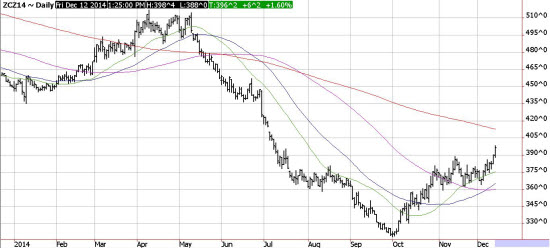
Iowa, Illinois, Nebraska, and Minnesota make up The Corn Belt of the United States as they’re responsible for almost half of the total corn grown in the U.S. Between April and mid-May, corn saw its strongest prices, creeping above $5.10 per bushel. A steady decline between June and October put the crop at its lowest price, under $3.30 per bushel. Corn’s final 2014 price in December closed at just over $3.90 per bushel.
Wheat
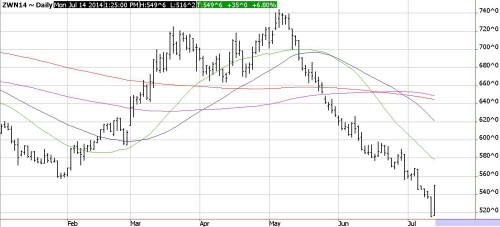
The wheat average seemed to increase in 2014 as the weather improved. In February, wheat was at $5.60 per bushel. It reached its peak in May, selling for as high as $7.40 per bushel. As May turned to June, the price declined until its final closing price of around $5.40 per bushel.
Soy
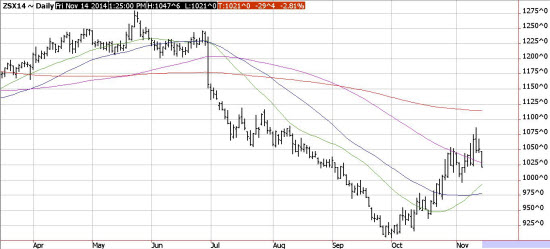
With states like Illinois and Iowa producing most of the soy in the United States, the crop reached its peak price in May, going for $12.75 per bushel. Soy dropped between July and October, bottoming out at below $9.25 per bushel before seeing a small increase in November and closing the year at just over $10.75 per bushel.
“2014 set a record year for grain production in the US but brought with it lower prices and the same should be expected for 2015 depending on weather and demand,” said Moe Agostino, Chief Community Strategist Farms.com Risk Management. “2014 also brought a record year for prices in the livestock sector but do not expect this to continue in 2015.”