Farms.com has documented notable ag events and innovations throughout America’s 250 years
Leading up to America’s 250th birthday on July 4, Farms.com has highlighted notable events for each decade since the 1770s.
The first article, which covered the timeframe between the 1770s and 1860s, included John Deere’s birth in 1800, and the invention of the corn planter by Illinois farmer George Brown in the 1850s.
The second piece explored the time from the 1870s to the 1960s.
These years saw the invention of the track tractor in the early 1900s, and the invention of 2,4-D in the 1940s, for example.
This final article in the series covers the 1970s to the 2020s.
1970s – John E. Franz Discovers Glyphosate’s Herbicidal Potential
Swiss chemist Henri Martin created glyphosate in 1950 as a possible antibiotic while working for Cilag, a pharmaceutical company.
When it didn’t work as intended, the company shelved the compound.
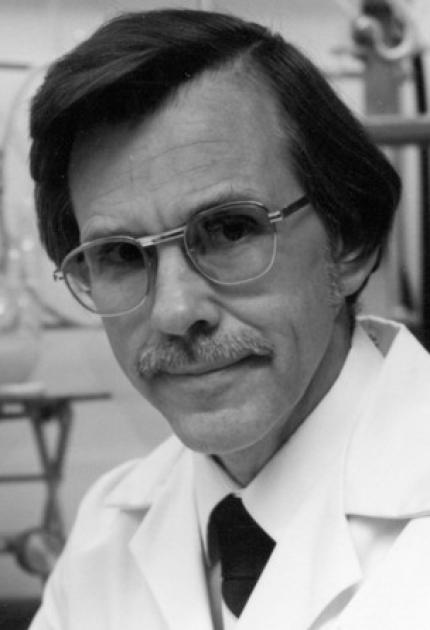
In 1970, however, John E. Franz, a chemist working at Monsanto, independently recreated glyphosate and, while studying the compound as a potential water softener, discovered its potential as an herbicide.
Franz and his colleagues found glyphosate stops plants from producing important amino acids needed for growth.
It took about three months of field tests for glyphosate to show its mettle.
The EPA granted glyphosate its registration in 1974 under the name Roundup.
1980s – Establishment of the Conservation Reserve Program
The Food Security Act of 1985, or that year’s Farm Bill, included the birth of the Conservation Reserve Program (CRP).
Congress created this program to combat high levels of soil erosion by paying farmers to remove cropland from production for up to 15 years.
In 1986 farmers enrolled almost 2 million acres of land and received payments up to $60 per acre.
For the 2025 fiscal year the USDA capped the program’s acreage at 27 million acres.
1990s – The First Yield Monitor Invented
Al Myers, founder and president of Ag Leader Technology, brought the first yield monitor, the Yield Monitor 2000, to the ag industry in 1992 after six years of development.
This early monitor tracked moisture, weight, bushels, and allowed farmers to calculate the information for an entire field or be broken into smaller measurements, and link these readings with GPS locations.
In addition, a memory card allowed farmers to save the information and transport it back to their office computers to create yield maps.
2000s – John Deere Launches AutoTrac
As precision agriculture started to gain traction, John Deere supported farmers in this space with AutoTrac, the first automated steering system.
Introduced for the first time in 2002, AutoTrac combined StarFire receivers and GreenStar displays with a terrain compensation module built into the StarFire capable of calculating the pitch and roll of a machine in real time to correct GPS coordinates.
At the time, farmers received pass-to-pass accuracy of between 11 and 19 inches.
2010s – LettuceBot
Developed in 2011, introduced in 2012, and available commercially beginning in 2013, Blue River Technology’s LettuceBot was one of the first tools in ag to utilize AI and machine learning.
The implement included its computer systems, automated sprayer nozzles, and a tank for inputs like fertilizer.
Pulled behind a tractor, the LettuceBot scanned rows and could differentiate between healthy lettuce plants and weeds with up to 98 percent accuracy. When it detected a weed, the robot would deliver highly concentrated fertilizer to control the weed.
John Deere acquired Blue River Technology in 2017 and uses its principles in the See & Spray product lineup.
2020s – John Deere Goes Autonomous
For as long as there’s been tractors, there’s been farmers operating them.
That’s until the 2022 Consumer Electronics Show when John Deere unveiled its autonomous 8R tractor to help address industry labor challenges.
This machine uses modern cameras and GPS technology to calculate its surroundings and avoid obstacles in real time.
Once a farmer brings the tractor to a field and configures it for autonomous use, he or she can monitor the tractor from a mobile app.
“Using John Deere Operations Center Mobile, they can swipe from left to right to start the machine. While the machine is working the farmer can leave the field to focus on other tasks, while monitoring the machine's status from their mobile device,” John Deere says.