Lincoln was born February 12, 1809
By Diego Flammini, Farms.com
Each president of the United States leaves an important memory once their terms are finished. For current US leader Barack Obama, it may be the elimination of Osama Bin Laden, George Washington was the first president of the country, Harry Truman decided to use the atomic bomb against Japan in World War II and Abraham Lincoln delivered the Gettysburg Address and ended slavery.
February 12 is Abraham Lincoln’s birthday. This year would be his 206th to be exact.
Lincoln’s impacts on farming and agriculture are still felt today as much as they were during his run as the 16th president of the United States.
Some of Lincoln’s biggest farming and agricultural accomplishments include:
May 15, 1862
It was on this day president Lincoln signed a bill that established the United States Department of Agriculture (USDA). He appointed Isaac Newton as the first Commissioner of Agriculture.
May 20, 1862
Lincoln signed the Homestead Act into law. This law transferred nearly 232 million acres of land from public to private ownership and created over 1 million farms.
July 2, 1862
The Morrill Land Grant College Act became law. The legislation allowed for donation of public lands to states for colleges of agriculture and “mechanical arts”.
Abraham Lincoln was a large supporter of studying farming and farm life as parts of his upbringing were spent on a farm.
“Every blade of grass is a study; and to produce two, where there was but one, is both a profit and a pleasure. And not grass alone; but soils, seeds, and seasons - hedges, ditches, and fences, draining, droughts, and irrigation - plowing, hoeing, and harrowing - reaping, mowing, and threshing - saving crops, pests of crops, diseases of crops, and what will prevent or cure them - implements, utensils, and machines, their relative merits and how to improve them - hogs, horses, and cattle - sheep, goats, and poultry - trees, shrubs, fruits, plants, and flowers - the thousand things of which these are specimens - each a world of study within itself.” – Abraham Lincoln
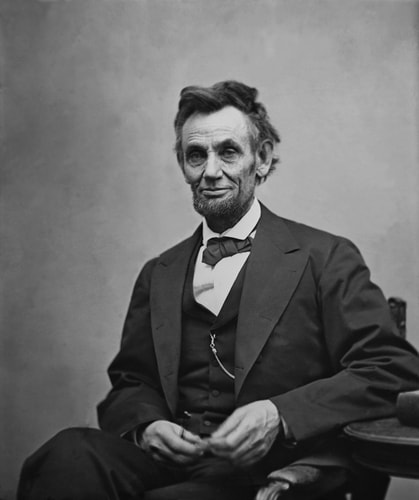
Abraham Lincoln
Shuttersock.com