Research shows the insects cultivated fungus after the dinosaurs went extinct
By Diego Flammini
Assistant Editor, North American Content
Farms.com
Debates can go on forever about who or what the best farmers may be, but new research has determined the first species to practice farming.
Researchers from the Smithsonian Institution and University of Copenhagen found a species of South American ants known as attini were cultivating fungus between 55 and 60 million years ago - a period of time which is after the extinction of dinosaurs.
“Social insect farmers cultivate fungi in subterranean gardens to produce edible proteins, lipids and carbohydrates through decomposition rather than the photosynthesis of most human crops,” says the study, published in Nature Communications.
As the ants continued to farm, they created “complex societies with industrial-scale farming.”
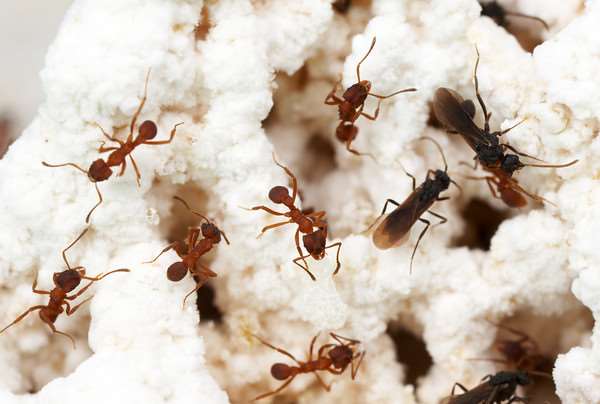
Attine ants
According to the study, farming on an industrial level has only been seen in “two non-human organisms, the fungus-growing ants and termites.”
A key finding of the research was that early farmer ants, like early human farmers, were in poorer health until methods improved.
“Research suggests that early attine farmers were metabolically less efficient than any species with traditional diets. Similarly, early human farmers of loosely domesticated crops had poorer health and smaller body stature compared with sympatric hunter-gatherers.”