Parts of the province experienced heavy rainfalls overnight
By Diego Flammini
Assistant Editor, North American Content
Farms.com
If patience is a virtue, then farmers in Ontario may be the most virtuous of them all.
Weeks of drought-like conditions have farmers concerned about their crops and resulted in wheat field fires. They’re not out of the woods yet, but the skies opened up overnight to provide some relief.
Producers took to Twitter to celebrate the rainfall regardless of how much they received.

Tweet from Joshua Deschryver
Photo: Twitter
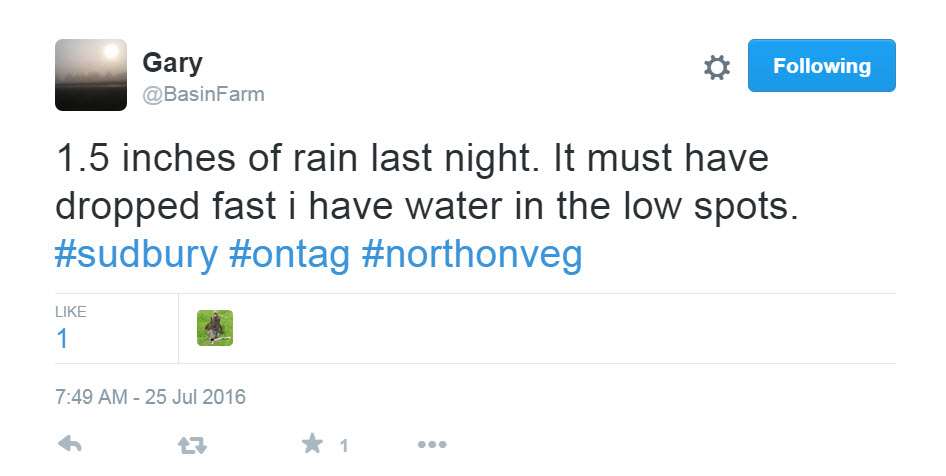
Tweet from Gary, a vegetable grower from Sudbury
Photo: Twitter
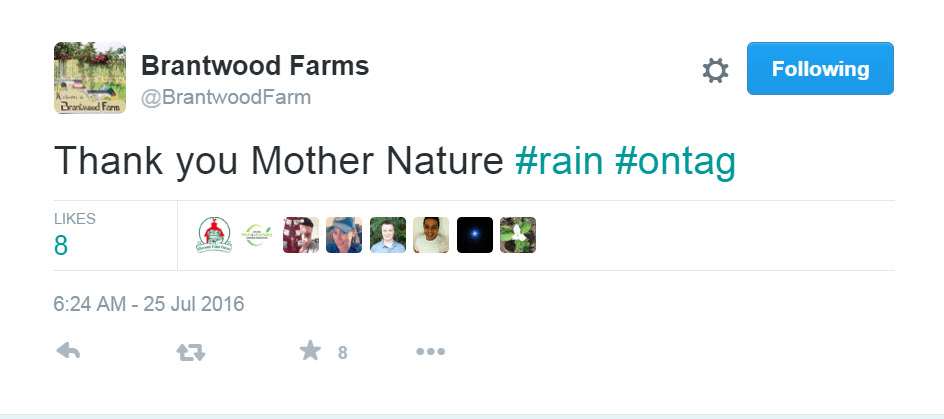
Tweet from Brantwood Farms
Photo: Twitter
Official rainfall numbers are still coming in, but early reports suggest areas like Hamilton and the Niagara Peninsula received 18mm of rain overnight.
According to The Weather Network, London’s highest chances of rain are on Thursday, Friday and Saturday with 40, 70 and 60 per cent chances, respectively.
Be sure to check Farms.com tomorrow as we will have an exclusive interview with Dave Phillips, senior climatologist with Environment Canada. He will dissect which regions of Ontario received the most rain and what the forecast may have in store.