Empowering women in agriculture through mechanization, technology, and equal opportunity
As many will know, the United Nations General Assembly adopted a resolution declaring 2026 as the International Year of the Women Farmer (IYWF), with 123 countries co-sponsoring the initiative. Proposed by the United States and co-sponsored by Canada, this resolution signals a global commitment to empowering women in agriculture and recognizing their contributions across agrifood systems.
Why This Matters
The goal of IYWF is clear: spotlight the essential roles women play in food production, trade, and sustainability—roles that often go unnoticed, particularly in developing countries. Women farmers are central to food security, nutrition, and economic resilience. Yet, the gender gap in agriculture remains significant even in Canada.
Signs of Progress
There are encouraging trends in Canada. The Labour Force Survey reported a 19.4% increase from 2017 to 2021 in the number of female supervisors and workers in technical occupations related to agriculture and natural resources.
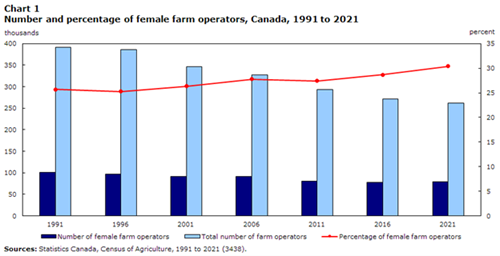
Similarly, 2021 Census of Agriculture data show that female farm operator numbers increased for the first time since 1991. In 2021, there were 79,795 female farm operators in Canada, up 2.3% from 2016, while male operator numbers declined by 5.8%.
Women now make up 30.4% of Canada’s farm operators, up from 28.7% in 2016. This growth is particularly strong among one-operator farms, where female operators increased by 26.5% between 2016 and 2021.
Alberta and Saskatchewan led this surge, especially in beef and grain operations.
Economic Impact
Interestingly, the biggest increase in female farm operators is coming from farms in the top revenue classes. From 2016 to 2021, farms earning $1 million to $1.99 million saw the largest net increase in female operators (+1,325), followed by farms earning $2 million and over (+1,195).
Why Mechanization Matters
Mechanization is a game-changer. It reduces physical barriers that historically limited women’s participation in heavy farm work. Studies show that when women have equal access to resources and technology, farm productivity rises. With modern equipment designed for efficiency and safety, women can manage larger operations and contribute to innovation on farm.
Addressing Labour Shortages
Many sectors of agriculture face labour shortages. Attracting and involving more women can help fill these critical gaps. Empowering women through training, technology, and leadership opportunities is not just fair—it’s essential for the future of farming. There is still much work to be done.
Key Facts & Statistics
- Women make up 30.4% of Canada’s farm operators (2021), up from 28.7% in 2016.
- 79,795 female farm operators were reported in Canada in 2021—a 2.3% increase from 2016.
- Male farm operator numbers dropped by 5.8% over the same period.
- Female operators managing one-operator farms increased by 26.5% between 2016 and 2021.
- Alberta (+1,065) and Saskatchewan (+855) led the increase in female one-operator farms.
- The largest gains were in beef farms (+1,495) and oilseed/grain farms (+1,035).
- Farms earning $1M–$1.99M saw the biggest increase in female operators (+1,325).
Resources
Header Photo Credit: FAO