The federal government has announced financial support for quarantined ranchers
By Jennifer Jackson
Finally, cattle ranchers affected by the bovine tuberculosis (TB) quarantine can expect financial support from the federal government.
Lawrence MacAulay announced the compensation plan yesterday in Parliament.
“Being a farmer I certainly understand that bovine TB is a serious challenge for these ranchers," MacAulay said in Ottawa.
"Working with the Province we are committed to compensate these ranchers for the costs they are facing, including interest on their advance payment loans."
The Canadian Food Inspection Agency claimed in a teleconference last week there are now six confirmed cases of TB. Depending on future findings, the investigation could continue for months, Farms.com reports.
"We are working hard to address this unfortunate situation and take measures to help these ranchers with this serious challenge," MacAulay said.
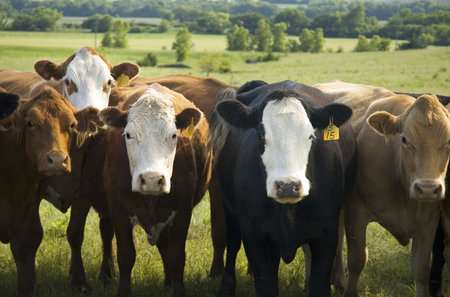
PrairieArtProject/iSTock/GettyImagesPlus
Oneil Carlier, the Alberta minister of agriculture, echoes these concerns, according to a CBC article.
"Bovine tuberculosis in Alberta couldn't have come at a worse time. They're looking for their one and only pay cheque and of course they can't do it,” Carlier told CBC. “So I'm quite happy that we're able to do something for them.”
Financial program arrangements are yet to be released or confirmed.
"I think (the compensation) will be somewhat of a split but we're happy knowing that this is going to be cost-shared between the two jurisdictions and that we're able to do something for these producers," Carlier told CBC.
Farms.com has reached out to the Alberta Beef Growers for comment.