By James Mitchell
Last week’s article by Josh focused on the role of cow slaughter in lean beef trimmings supplies and how a tighter cull cow market has driven pries to record levels. This week, we extend the conversation to highlight how imports help balance domestic lean and fat trimmings supplies. The key shift is not just fewer cows, but also heavier fed cattle carcasses producing more fat trim. Together, those changes til the U.S. trim supply toward fat.
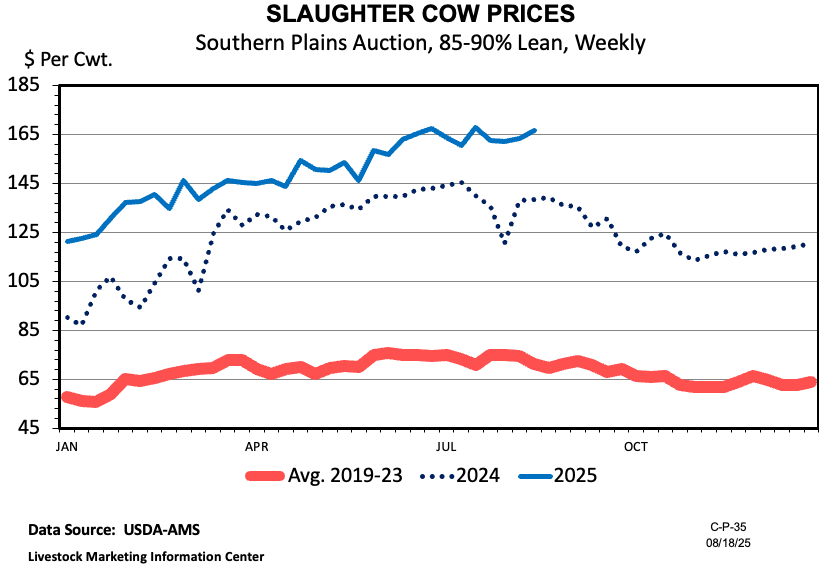
Domestic lean trim supplies are down because of lower cow slaughter. Through June, combined beef and dairy cow slaughter is down 13%, translating to an estimated 10% decline in domestic lean trimmings production. Lean trimmings from cull cows and bulls are the primary source of 85s and 90s used in ground beef. At the same time, fed steer and heifer dressed weights remain historically high. Through June, fed cattle slaughter is down 4%, but dressed steer weights are up 3%, adding more pounds of fat trim. The net result is a trim market with proportionally less lean and more fat.
Source : osu.edu/