Premier Ford challenged brewers to lower prices by Labour Day
By Diego Flammini
Staff Writer
Farms.com
The reintroduction of a low-cost beer program could be good news for Ontario’s barley producers.
Today, Premier Ford announced that his campaign promise of ‘Buck-a-Beer’ will be back in Ontario and challenged brewers to make the necessary price adjustments by Labour Day. Those that do could receive preferable LCBO store displays and advertising.
“We were elected on a promise to reduce red tape and put the people first,” he said today at Barley Days Brewery in Picton, Ont. “This included a promise to bring ‘Buck-a-Beer’ back to Ontario. Today I am proud to say: promise made, promise kept.”
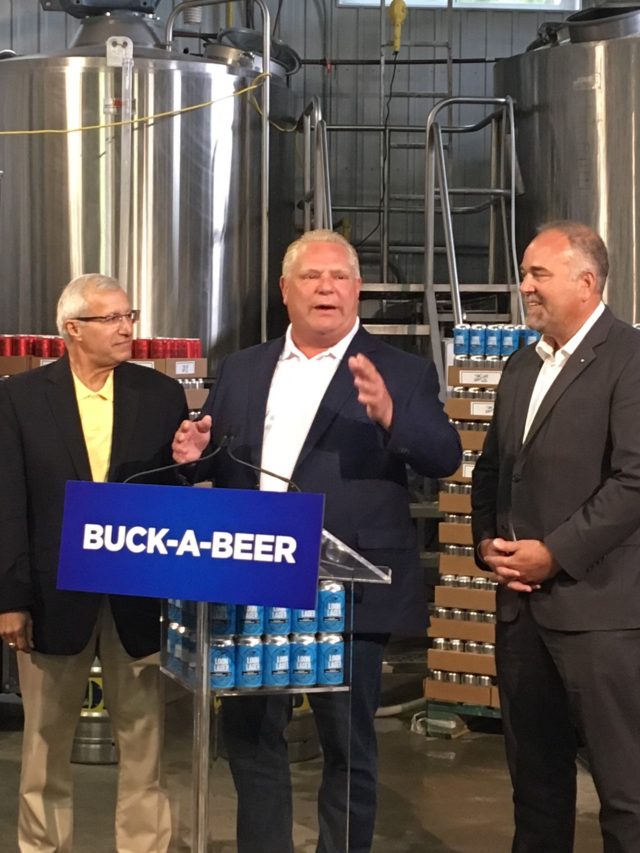
Left to right: Finance Minister Vic Fedeli, Premier Doug Ford and Minister of Government and Consumer Services Todd Smith.
Photo: Amanda Smith/Quinte News
The minimum price for a bottle of beer at the LCBO was $1.00 from 2005 until 2008. Then, the Liberal government raised the minimum price to $1.25.
While several breweries have said they will not participate in the dollar beer program, some of the ingredient producers are happy about the announcement.
If brewers decide to develop a new beer to meet the requirements of the program, that could mean increased market opportunities.
“The announcement is great news for me and other barley growers,” Gord Masters, a producer from Kawartha Lakes, Ont., told Farms.com today. “Any initiative that can provide another way for farmers to market their crops is always welcomed. I’m sure hop growers would feel the same way.”
Masters also thinks $1.00 beer is a good way to attract new connoisseurs to beer.
“I know some people who don’t buy much beer because it’s too expensive,” he said. Someone “can spend a dollar to try a beer and he or she does not end up with a case just sitting at home.”