Nine Ontario barns have burned in 2016
By Diego Flammini
Assistant Editor, North American Content
Farms.com
A Saturday evening barn fire on Maryhill Road around the Ariss Valley Golf and Country Club claimed the lives of 45 cattle.
Maryhill Fire Chief Kevin Karley told the Waterloo Region Record that volunteer firefighters from surrounding Woolwich Township were unable to overcome the flames responsible for burning the straw-filled barn.
Nearly 100 more cows were in a barn close by but were not harmed as a result of the fire.
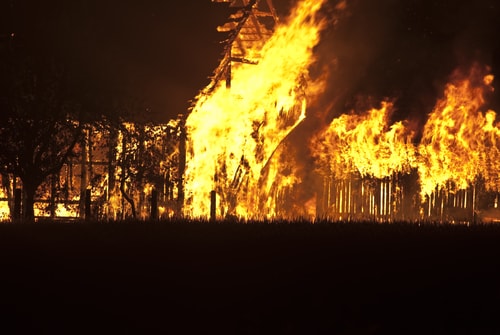
The total damage including the livestock, the barn and what was inside, and heat damage to another barn, is estimated to total around $500,000.
Since the beginning of the year, barn fires have become a recurring theme on Ontario farms.
Ontario barn fire timeline:
Jan. 5 – 43 Standardbred horses killed in a barn fire in Puslinch
Jan. 14 – 13 Arabian horses killed in a barn fire in Mount Forest
Jan. 16 – Empty barn burns in Georgetown
Morning of Jan. 17 – Barn fire near Delaware kills 500 milking goats and nearly 30 cattle
Afternoon of Jan. 17 – Six tractors and other equipment destroyed in a barn fire in Flamborough
Jan. 19 – Barn fire in Parkhill kills nearly 2,000 pigs. Damages estimated at $1.1 million
Jan. 23 – Barn fire near Stratford claims nearly 200 pigs
Feb. 25 – 300 hogs lost in a barn fire near Listowel and 70 dairy cattle perished in a fire near Brockton, Ontario. The Brockton fire was estimated to cause more than $500,000 worth of damage