Researcher raises concerns about insecticide drift from fields
By Patrick Lynch, CCA-ON
Farms.com
Dr. Art Schaafsma, a professor of field crop pest management at the Ridgetown Campus of the University of Guelph, gave a rather sobering presentation at the South West Ag Conference.
His research was able to document and quantify how much insecticide seed treatment is left the field. Some of this insecticide drifted a significant distance from the planter, according to Schaafsma.
The issue is that dust is being expelled from vacuum planters. This dust contains seed treatments. Currently, neonic insecticides are getting into the water, said Schaafsma.
We need filters both at the intake and exhaust of the vacuum planter to reduce the amount of insecticide getting into the air, Schaafsma suggested. The treated seed is being blamed. We will transition away from using neonics insecticides in the next year or two but the issue of seed treatment insecticides escaping the field will remain.
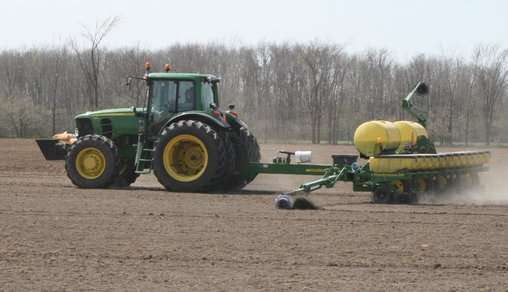
We need co-operation between the planter engineers and agronomists to design a system that nullifies seed treatments leaving the field. Even if we could have the current vacuum planter system exhaust into the soil instead of on top of the soil that would be beneficial. It is believed that insecticide on top of the soil is making its way into water, said Schaafsma.
SWAC was held Jan. 4 to 5 at the Ridgetown Campus of the University of Guelph.