Farms.com Home   Ag Industry News

Increase corn yields with the addition of wheat to your rotation

Follow this guide for planning your soybean crop prior to the wheat

By Patrick Lynch, CCA-ON
Farms.com

Depending on what research you look at, if you put wheat into your crop rotation you can increase corn yields by 10 to 20 bu/ac. (Indeed, I spoke with one grower this month who said on his farm there was a 20 bu/ac difference in a side-by-side comparison in 2016.)

If you believe this research, you need to plan now where you will plant wheat this fall. Once you have made this decision, you need to pick a soybean variety.

If the farm/field can be planted early, pick the best variety for that farm/field. If, for some reason, the farm/field will be planted later, then pick an earlier variety. You will give up yield on the soybeans but will have a corn yield increase the following year.
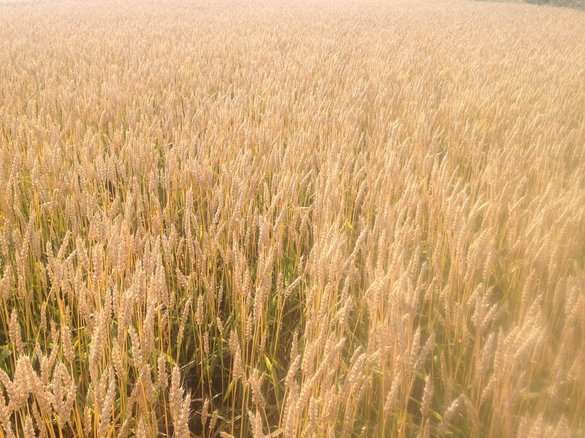
 

If you are in an area of 2,800 CHUs or more, you can consider double-cropping soybeans after the wheat crop. The total soybean yield over the two seasons will be greater than picking a long-season variety. In the latter case, you risk not getting wheat planted in a timely fashion this fall after the soybean harvest. 


Trending Video

Evolution of Beef Cattle Farming

Video: Evolution of Beef Cattle Farming

The Clear Conversations podcast took to the road for a special episode recorded in Nashville during CattleCon, bringing listeners straight into the heart of the cattle industry. Host Tracy Sellers welcomed rancher Steve Wooten of Beatty Canyon Ranch in Colorado for a wide-ranging discussion that blended family history and sustainability, particularly as it relates to the future of beef production.

Sustainability emerged as a central theme of the conversation, a word that Wooten acknowledges can mean very different things depending on who you ask. For him, sustainability starts with the soil. Healthy soil produces healthy grass, which supports efficient cattle capable of producing year after year with minimal external inputs. It’s an approach that equally considers vegetation, animal efficiency, and long-term profitability.

That philosophy aligned naturally with Wooten’s involvement in the U.S. Roundtable for Sustainable Beef, where he served as a representative for the Colorado Cattlemen’s Association. The roundtable brings together the entire beef supply chain—from producers to retailers—along with universities, NGOs, and allied industries. Its goal is not regulation, Wooten emphasized, but collaboration, shared learning, and continuous improvement.