Farms.com Home   Ag Industry News

Split-Fire introduces electric log splitter

Model 3215HT can plug into traditional outlets

By Diego Flammini
Assistant Editor, North American Content
Farms.com

Norwich, Ontario’s Split-Fire Sales has introduced a new log splitter that runs on electricity.

The model 3215HT runs on a 120V/15A high torque electric motor from North American manufacturer Leeson Electric and can plug into traditional household outlets.
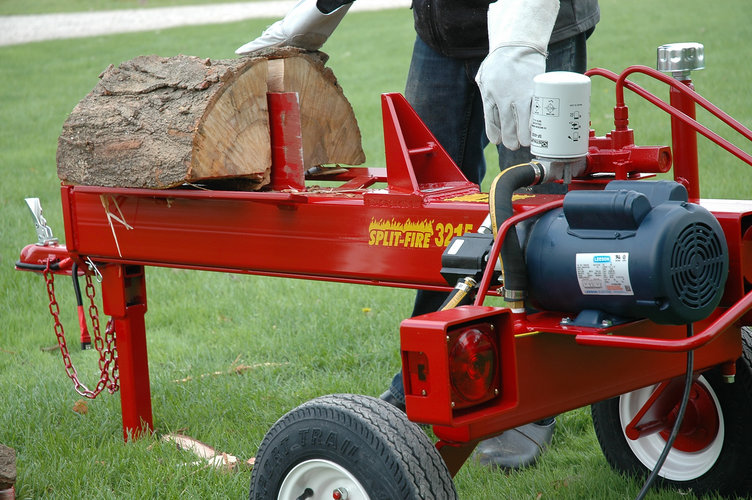
Split-Fire 3215

Its design is similar to the 3255 bi-directional log splitter which Split-Fire first introduced 30 years ago.  A square, tube frame instead of an I-beam makes the splitter stronger and less susceptible to bowing.

It’s an 18-ton log splitter capable of completing a full stroke (forwards and backwards) in only 16 seconds.

It features 2-way splitting, meaning the wood is split from both ends and is rated for logs anywhere between 30 and 36 inches in diameter and 24 inches in length.

“The knife is moving back and forth on the splitter bed splitting your wood,” said Chris Skalkos, marketing director for Split-Fire. “Unlike traditional single stroke machines. A much more productive design.”

Split-Fire’s unique log stop design helps keep the user safe by preventing any “fly-outs” when splitting angled logs.

In the market for a log splitter or other pieces of used farm equipment? Check out the Farms.com Used Farm Equipment listings.


Trending Video

Finding a Balance of Innovation and Regulation - Dr. Peter Facchini

Video: Finding a Balance of Innovation and Regulation - Dr. Peter Facchini

Regulations help markets and industry exist on level playing fields, keeping consumers safe and innovation from going too far. However, incredibly strict regulations can stunt innovation and cause entire industries to wither away. Dr. Peter James Facchini brings his perspective on how existing regulations have slowed the advancement of medical developments within Canada. Given the international concern of opium poppy’s illicit potential, Health Canada must abide by this global policy. But with modern technology pushing the development of many pharmaceuticals to being grown via fermentation, is it time to reconsider the rules?

Dr. Peter James Facchini leads research into the metabolic biochemistry in opium poppy at the University of Calgary. For more than 30 years, his work has contributed to the increased availability of benzylisoquinoline alkaloid biosynthetic genes to assist in the creation of morphine for pharmaceutical use. Dr. Facchini completed his B.Sc. and Ph.D. in Biological Sciences at the University of Toronto before completing Postdoctoral Fellowships in Biochemistry at the University of Kentucky in 1992 & Université de Montréal in 1995.