Differentiate early and later models by the color of the stripe on the hood
IN THE SHOP with Rachel
By Rachel Gingell
Farms.com
The White 2-70 is a solid 70 horsepower tractor that can be purchased for a reasonable price. If you’re looking for a tractor that’s inexpensive, reliable and easy to work on, then the White 2-70 might be just the ticket for you!
The White 2-70 was manufactured from 1976-1982. The tractor was a part of White’s Field Boss series. The Field Boss line was White’s way of merging their many brands (Oliver, Cockshutt and Minneapolis-Moline) into one cohesive product line.
The tractor was offered with two different color schemes – early models have a gray stripe on the hood, while later models are accented with a red stripe. This is a handy way to identify tractors on the newer end of the manufacturing run. However, note that there are no mechanical differences between gray and red stripe tractors: buy whichever tractor is in better condition, regardless of production year.
White enthusiasts praise this tractor’s hard working engine. (One fan described it as “completely bulletproof.”) If well maintained, the tractor will easily reach its 70 horsepower rating – some even say they saw some of these tractors top 85 horsepower when they were “fresh from the factory.” The transmission and steering are very reliable.
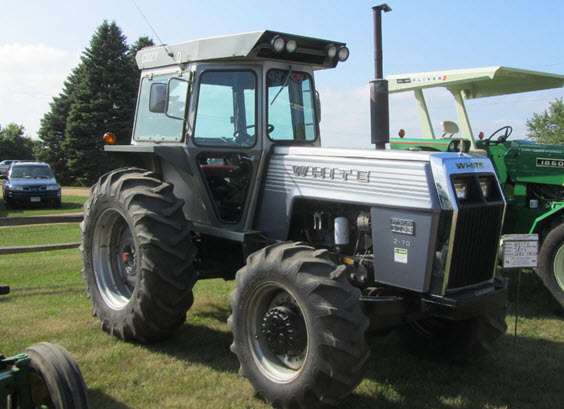
White 2-70
Photo: TractorData.com
What sets this tractor apart is its ease of service. Unlike most other tractors, the 2-70 doesn’t need to be split in order to work on the clutch or the engine. This saves a lot of time and frustration when you’re doing a big repair job. The brakes and steering systems are also well-designed for ease of service. This is a perk no matter if you do mechanical work yourself or if you take it to a shop (where you pay by the hour).
Many of the systems in this tractor weren’t original to the model 2-70. That’s great news, since it means that you’ll find a lot of parts interchangeability between the 2-70 and other tractors. Today, parts are readily available to fix almost anything that could go wrong with the 2-70.
The tractor wasn’t heavy on options but what it does offer is well designed. The 2-70 came with a choice of diesel or gasoline engines. The independent PTO is really handy. The factory didn’t offer cabs, although you’ll occasionally see one for sale that had a cab added aftermarket.