The country hasn’t received imports of American corn since 2016
By Diego Flammini
Staff Writer
Farms.com
An Asian country received its first shipment of U.S. corn in two years.
Members of the U.S. Grains Council (USGC), as well as USDA and Vietnamese officials welcomed 67,000 metric tons (2.64 million bushels) of American corn to the port of Cai Lan on May 3.
The corn’s arrival in Vietnam marks the first U.S. shipment since 2016.
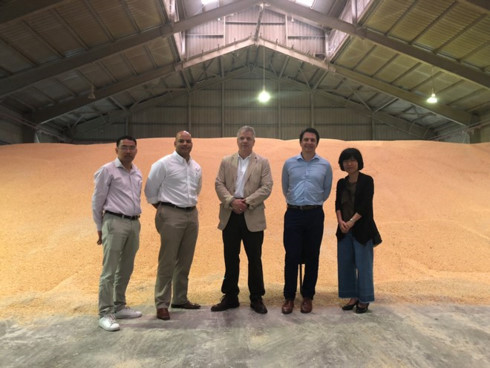
U.S. and Vietnamese officials stand in front of a shipment of U.S. corn.
In October of that year, Ballion, or warehouse beetles, appeared in some loads of U.S. corn. Females can lay eggs on dried plant material and the larvae can damage grain as they feed.
The Vietnamese Plant Protection Department created new fumigation requirements for U.S. corn and suspended imports as of December 2016.
The country lifted its suspension on American grain imports in September 2017.
Local farmers produce about 30 million metric tons of feed per year but will rely on U.S. grain to fulfill market needs.
The resumed corn market access could be worth US$700 million per year, said Manuel Sanchez, USGC regional director for Southeast Asia.
“Vietnam is the largest corn importer in Southeast Asia with tremendous growth opportunities for U.S. coarse grain imports over the next five years,” he said in a release on Thursday. “Vietnam’s growing population, urbanization and rapid economic growth have encouraged tremendous feed demand expansion in Vietnam’s commercial feed and livestock sectors.”
In February, the USDA opened an Animal Plant and Health Inspection Service (APHIS) office in Vietnam to help strengthen the trade relationship between the two countries.
“The on-the-ground technical expertise of the APHIS team will be an important complement to the trade policy and market development work being done by our Foreign Agricultural Service staff,” Greg Ibach, USDA Under Secretary for Marketing and Regulatory Programs, said in a Feb. 22 statement.