In 2013, SoilOptix® CEO, Paul Raymer, was introduced to an intriguing innovation developed in Holland: gamma spectrometry as a tool to map agricultural soil. Being pioneers in the introduction of disruptive agtech to the Ontario market, he and his parents rolled the dice and decided to concentrate their efforts on improving and marketing the mapping solution. Over the ensuing four years, Practical Precision, the original Raymer business, developed the technology as a service to growers in Ontario, Western Canada, and the northern US. In 2017, the Raymers incorporated SoilOptix®, which by then was well on its way to today’s thriving enterprise of over 30 Canadian employees, as well as a smaller team in the Philippines.
This growing group of professionals has positioned a modest agricultural technology business at the forefront of the global soil mapping sector, operating over 110 sensors in more than 15 countries.
Supporting such expansion in so short a time required that the Raymers develop and fine tune internal processes to accommodate growing global demand for data analytics. Furthermore, the tendency of conventional agriculture to adopt sustainable practices offered an opportunity to add soil organic carbon measurement capacity in support of regenerative agriculture.
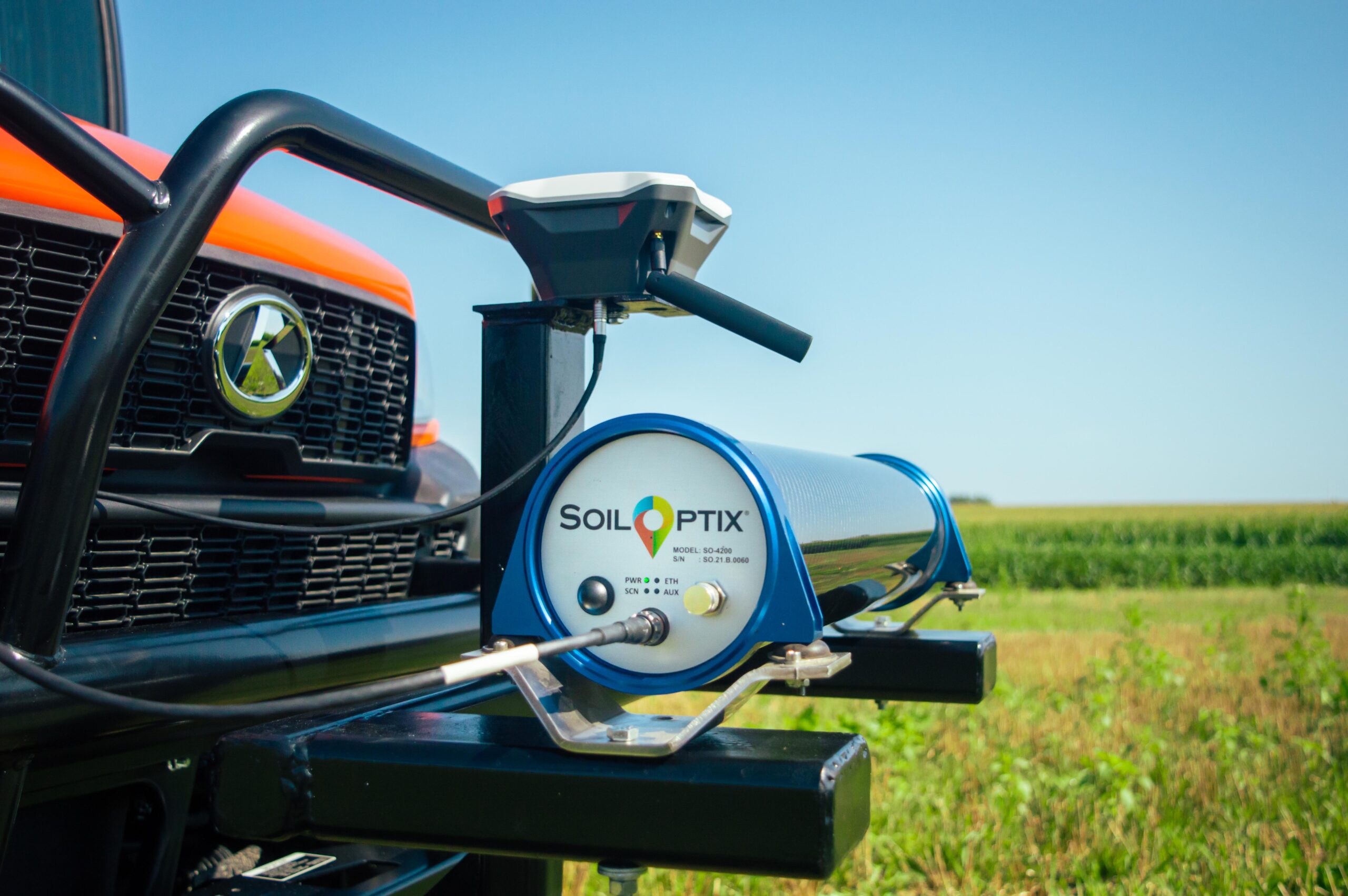
“Regardless of where you go, soil is in a constant state of decay,” says Paul. “As a result, it is always emitting radiation that reveals important information. The SoilOptix® topsoil mapping system uses a sensor mounted on a vehicle that navigates fields, mapping 12-metre swaths at 20km an hour. Mounted 60cm above ground, the sensor contains a crystal that absorbs bands of radiation—a signature, if you will—which, when coupled with soil samples extracted from strategically relevant locations, allow us to predict soil characteristics with a high degree of accuracy.”
Click here to see more...