When going to the pharmacy, consumers are often faced with a choice to select the brand name drug for their ailment or opt for the less expensive generic product.
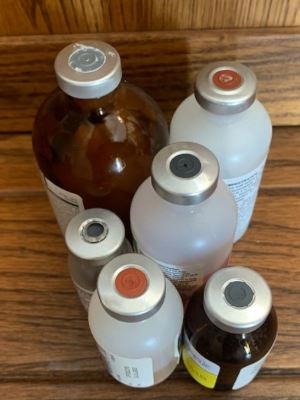
Just as with humans, cattle producers and their veterinary partners make those same decisions for the livestock in their care.
In recent months, there has been an increase in generic products coming into the marketplace, said Brad White, Kansas State University Beef Cattle Institute director and veterinarian. Speaking with his veterinary colleague, Brian Lubbers, on a recent Cattle Chat podcast, the experts discussed the rigorous process of drug development and considerations for generic drug selection.
“When generic drugs come on the market, visit with your veterinarian to see if it makes sense to use the generics in your operation,” White said.
Lubbers added: “To get a generic drug approved, it has to be either essentially identical in contents and formulation, or be very close to the pioneer (brand-name) product in the way it is absorbed by the animals.”
If the drug formulation is different, the manufacturer of the generic drug has to prove that the effects of the generic are equivalent to the pioneer product, he said.
“Some of the steps for the generic approval process are streamlined because they are basing it on the pioneer product,” Lubbers said.
The veterinarians agreed that one of the main advantages of a generic drug is the cheaper product cost.
“Generics are more economical because the drug sponsor doesn’t have to invest the same amount of research dollars as the pioneer drug maker did initially to prove it was safe,” White said.
Lubbers said that it takes animal drug sponsors 8-10 years to develop and test a new product at a cost of several million dollars.
“Because the original testing to demonstrate efficacy and safety carries such a large cost burden for the pioneer product, they are granted market exclusivity for a period of time to help recuperate those costs,” Lubbers said. After that period of time has passed, generics are allowed to be approved.
“Generic drugs are shown to be bioequivalent to the pioneer product, which was demonstrated to be safe and effective,” Lubber said.
He said that because generic drugs do not have to go through the expensive efficacy and safety studies, they are less expensive. That safety check includes meeting the U.S. Food and Drug Administration standards for human food safety.
For example, Lubbers said, the same chemical, manufacturing and control (CMC) technical section must be completed for both the pioneer and generic products for approval.
“The approval process is there to protect producers using those products, so I think people can be confident in using generics,” Lubbers said.
Source : k-state.edu