Farms.com Home   News

China Set to Hit Pause Button on U.S. Corn Buying on Weak Market

China is likely to take a break from buying large amounts of U.S. corn after record purchases this year because the domestic harvest is approaching and local prices have slumped to the cheapest since late 2020.

The world’s largest importer has already bought more than 10.5 million tons of U.S. corn for the 2021-22 marketing year, and over 23 million tons for the current season, U.S. Department of Agriculture data show. Total imports next year will likely be 20 million tons, according to the USDA’s Foreign Agricultural Service, while the USDA’s official forecast for this year is 26 million tons.

“We don’t expect any more purchases in the short term as the harvest will be available in September and demand is weakening,” said Feng Lichen, chief analyst with industry portal yumi.com.cn. Corn futures on the Dalian exchange have dropped to the lowest level this year with the grain being replaced in animal feed by imported barley and sorghum and local wheat and rice.
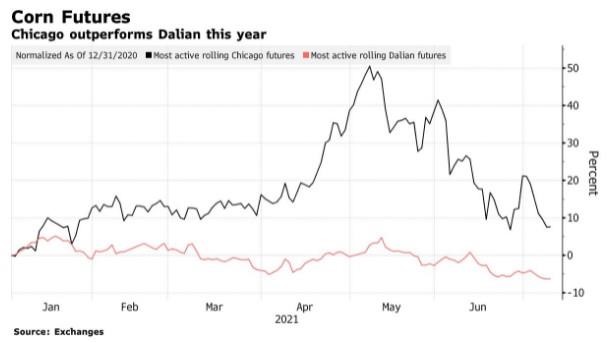
China Set to Hit Pause Button on U.S. Corn Buying on Weak Market

The drop in the domestic market and higher shipping costs mean there’s less incentive to buy from overseas. A fresh round of purchases from the U.S. for state stockpiles seems unrealistic, said one industry source. Meanwhile, private companies have already used up their quota allocations, so additional purchases are unlikely before the end of the year, said the source, who asked not to be identified commenting on buying strategy.

Click here to see more...

Trending Video

Evolution of Beef Cattle Farming

Video: Evolution of Beef Cattle Farming

The Clear Conversations podcast took to the road for a special episode recorded in Nashville during CattleCon, bringing listeners straight into the heart of the cattle industry. Host Tracy Sellers welcomed rancher Steve Wooten of Beatty Canyon Ranch in Colorado for a wide-ranging discussion that blended family history and sustainability, particularly as it relates to the future of beef production.

Sustainability emerged as a central theme of the conversation, a word that Wooten acknowledges can mean very different things depending on who you ask. For him, sustainability starts with the soil. Healthy soil produces healthy grass, which supports efficient cattle capable of producing year after year with minimal external inputs. It’s an approach that equally considers vegetation, animal efficiency, and long-term profitability.

That philosophy aligned naturally with Wooten’s involvement in the U.S. Roundtable for Sustainable Beef, where he served as a representative for the Colorado Cattlemen’s Association. The roundtable brings together the entire beef supply chain—from producers to retailers—along with universities, NGOs, and allied industries. Its goal is not regulation, Wooten emphasized, but collaboration, shared learning, and continuous improvement.