By Tracey Erickson
Livestock Decision Aid:
Feed comparison calculators available!
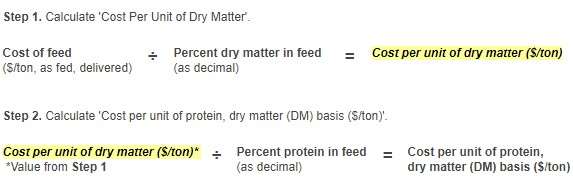
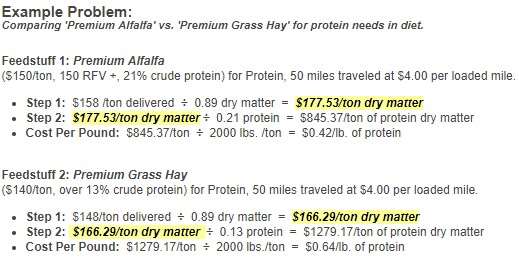
SDSU Extension recently updated the feed cost comparison calculator, which is one of the three calculators offered as part of its Livestock Decision Aid, which can be used on mobile and desktop devices. It is suggested to have a basic feedstuff analysis available when using the tool and to know the dry matter content of the feedstuff for an accurate comparison. However, if you prefer to do the calculations by hand, please refer to the formula and examples below.
Comparing Feeds:
Pricing feed 'protein' & 'energy' sources by hand
When producers decide to purchase feedstuffs to balance diets, the first question often asked is, “Do I need a source of energy or protein or both to economically balance the ration?” Next is evaluating what is on-hand for feedstuffs compared to what might need to be purchased. The final question then is “What might be the most economical feedstuff, if feed is to be purchased?”
Producers often classify feedstuffs into categories such as forages, grains, supplements, and minerals/vitamins. From these major categories we can decide what is needed to balance the diet. Is it protein, energy, or minerals/vitamins? In order to compare apples to apples you will need to look at the amount of each nutrient available on a dry matter basis so that an accurate cost comparison can be made for the desired nutrient. The following formulas allow you make this comparison when evaluating protein and energy in feedstuffs and their cost to the diet.
Pricing Feed Protein Sources
Click here to see more...