By Hector Menendez
Complex interactions.
Grazing systems are complex, because soil, water, forage and livestock components are interconnected and affect each other. Consequently, grazing management often creates compounding favorable (virtuous) or unfavorable (vicious) patterns of behavior for key metrics, like soil moisture, forage production and animal gain. Virtuous behavior causes the functionality of the grazing system to be more productive, resilient and sustainable over time, while vicious behavior leads to the opposite. Drought impact on forage productivity reveals the consequences of past grazing management decisions; combined with declines in forage availability, there is an increased risk of producers entering a vicious pattern of behavior, chiefly through overgrazing.
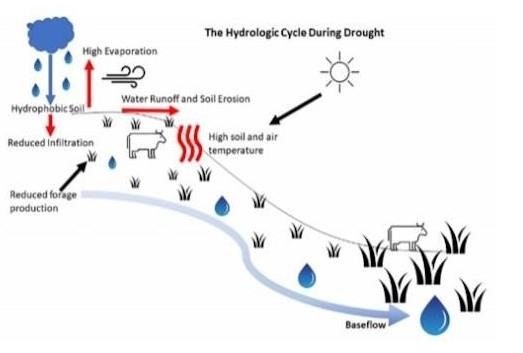
Figure 1. Diagram of the hydrologic cycle during drought.
Overgrazing during drought is likely to reduce ground cover, thereby increasing soil temperatures and evaporation rates. Larger evaporation rates reduce soil moisture levels and can cause soil particles to become hydrophobic, preventing water infiltration. Diminished soil water leads to further reductions in available forage, perpetuating the vicious cycle (Figure 1). This water-limiting process creates the ideal situation for surface water runoff and soil loss from wind and water erosion (Figure 2).
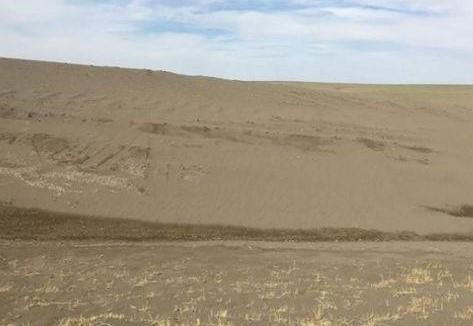
Figure 2. Extreme soil wind erosion to a winter wheat field in western South Dakota.
Management considerations.
Grazing management that avoids activating vicious patterns of behavior helps mitigate the impact of drought. For example, Figure 1 shows how subsurface water flows are likely to provide soil moisture for forage growth at the toe-slope position of hills. Strategically grazing these areas and avoiding overgrazing may help offset reduced forage yields in the upslope position of hills. Therefore, it is crucial to understand how grazing management, especially during times of drought, can be used to avoid vicious patterns of behavior leading to reduced soil, water and forage performance.
Reports of dry conditions often cause the immediate question of maintaining your cattle herd size without increasing cost. Unfortunately, if you’re asking this question, it is likely that the battle to maintain profitability is over before it began. Producers can put themselves “back in the driver’s seat” by developing annual systems-level grazing plans for both favorable and unfavorable situations and by doing so now. One way to start this is by thinking about adaptive management as a way to increase the flexibility and resiliency of your operation. The essence of adaptive management is increasing flexibility within an operation and actively monitoring conditions to influence decision making. Reach out to your local U.S. Department of Agriculture Natural Resources Conservation Service office or SDSU Extension office to get started.
Source : sdstate.edu