Ralstonia solanacearum is a soil-borne pathogen that devastates tomato and other Solanaceae crops globally. Traditional chemical controls have proven inadequate and environmentally damaging.
The plant root microbiome offers a potential solution by naturally inhibiting pathogens or competing for resources. However, limited understanding of these interactions, particularly iron competition, hinders effective field applications. Due to these challenges, it is essential to investigate mechanisms like siderophore-mediated iron competition more thoroughly.
A collaborative team from Nanjing Agricultural University, in partnership with international researchers, published a new study in Horticulture Research that reveals that Pseudomonas consortia employing siderophore-mediated competition suppress Ralstonia solanacearum more effectively than other mechanisms. This work pioneers a new strategy for utilizing microbial interactions to defend crops from bacterial wilt.
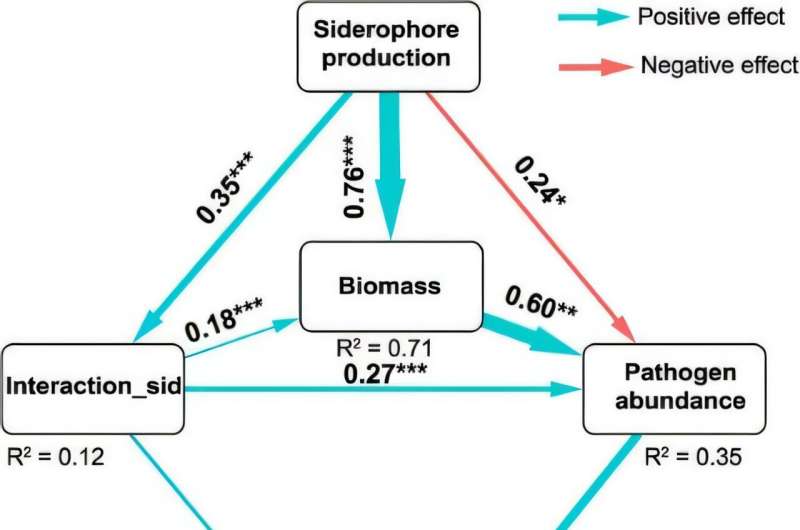
The researchers examined Pseudomonas strains known for their diverse siderophore production, revealing how these molecules disrupt the pathogen's access to iron. Through experiments under iron-limited and iron-rich conditions, they demonstrated that siderophores significantly enhanced pathogen inhibition.
A greenhouse assay validated these findings, showing reduced disease incidence in tomato plants inoculated with siderophore-producing consortia. Interestingly, the study found that while siderophores were highly effective, other antimicrobial metabolites had limited impact in iron-deficient environments. The researchers concluded that iron competition drives microbial community dynamics and is pivotal in disease suppression.
Click here to see more...