Kansas State University is one of 13 prominent research institutions in the United States that joined the SoAR Foundation today in calling for a surge in federal support of food and agricultural science. “Retaking the Field,” a report released by this coalition, highlights recent scientific innovations and illustrates how U.S. agricultural production is losing ground to China and other global competitors.
“The ‘Retaking the Field’ report highlights the impact of the publicly funded land grant university system in responding to grand challenges around food and agricultural production, now and into the future,” said Ernie Minton, Kansas State University associate dean of research and graduate programs. “In Kansas, agriculture drives the economy. It is the state’s largest industry and the state’s largest employer. As Kansas’ land grant university, K-State strives to serve that industry as an important provider of new technologies, not only in the area highlighted in this report, but many areas where we have unique strengths in water, crops, livestock and other mission-focused research. However, state and federal investments in food and agricultural research must expand to ensure that needed technologies emerge at a pace that meets future production challenges.”
“Retaking the Field” looks at the importance of agriculture and its related industries to the U.S. economy. According to the U.S. Department of Agriculture, this sector was responsible for nearly 1 in 10 jobs in 2014 and contributed $835 billion to the U.S. gross domestic product. Even though every public dollar invested in agricultural research provides $20 in economic returns, the federal budget for agricultural research has remained flat for decades. Today, the U.S. trails China in both agricultural production and public research funding.
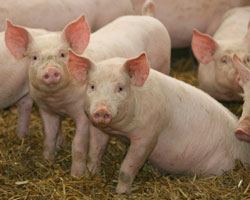
“The first introduction of PEDv (Porcine Epidemic Diarrhea Virus) into the U.S. swine industry in 2013 was devastating with approximately 60 percent of the sow herds becoming infected with many herds reporting 100 percent piglet mortality at the onset of the infection,” said Jason Woodworth, Kansas State University research associate professor. Woodworth and his team first confirmed pig feed as a path of transmission for the virus. Their efforts are highlighted in the report.
“At Kansas State, we quickly put together a team that combined our strengths in applied swine nutrition, feed science, and veterinary medicine and partnered with experts at the Iowa State University Vet Diagnostic Laboratory to conduct research studies that successfully generated information for pork producers and feed manufacturers to identify ways to mitigate PEDv risk,” Woodworth said. “Our work focused on ways to manufacture or treat feed that would reduce cross contamination with the ultimate goal to prevent the spread of the virus to new farms. Our work was sponsored by the National Pork Board and it was their quick call to action that allowed the U.S. swine industry to become better educated about this virus and to ultimately find ways to minimize the spread of PEDv.”
The K-State team played a critical role in containing the outbreak. The cumulative incidence of PEDv infections dropped from 56 percent in 2013-14 to 6 percent in 2015-16.
“Researchers are discovering incredible breakthroughs, helping farmers produce more food using fewer resources, and keeping our meals safe and nutritious,” said Thomas Grumbly, president of the SoAR Foundation. “However, the science behind agriculture and food production is starved of federal support at a time of unprecedented challenges. A new surge in public funding is essential if our agricultural system is going to meet the needs of American families in an increasingly competitive global market.”
Farming has never been an easy endeavor and today’s challenges to agricultural production are daunting. The historic California drought continues and U.S. production is also threatened by new pests and pathogens, like the 2015 Avian Influenza outbreak that led to the culling of 48 million birds in 15 states and $2.6 billion in economic damages.
“Every year, the director of national intelligence testifies before Congress that our national security is threatened by hunger in unstable regions,” Grumbly said. “As the number of people on our planet continues to grow, we must produce more food. This cannot be done with yesterday’s science. We need a larger infusion of cutting-edge technologies.”