Farms.com Home   News

Maximizing Carcass Value Through Weaning Management and Stress Reduction

By Francis Fluharty

Many all-natural programs, commercial feedlots, and cattle producers who retain ownership through the feedlot understand that weaning programs that boost the immunity of the calf by minimizing the stress of weaning are important, as weaning can have impacts on animal health, growth rate, feed efficiency, and marbling (Duffand Galyean, 2007). Cattle Fax reported at this summer’s NCBA convention in Nashville that in a recent survey nearly 30% of cow-calf producer respondents retained ownership through thefeedlot. For those producers, and anyone trying to manage calves for a premium, understanding the relationship that weaning stress and morbidity have on USDA QualityGrades is critical.
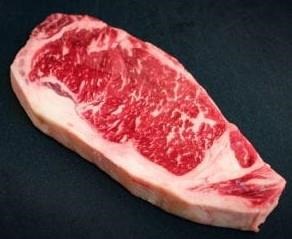
Presently more than 80% of U.S. cattle harvested are grading Prime and Choice.

Presently more than 80% of U.S. cattle harvested are grading Prime and Choice.

We need to understand that the days of 3% USDA Prime carcasses, and loads of 50% USDA Choice carcasses are gone. According to the . . .

Continue reading Maximizing Carcass Value Through Weaning Management and Stress Reduction

Source : osu.edu

Trending Video

Houston, we have a problem with Canola + Screwworm in U S Cattle!

Video: Houston, we have a problem with Canola + Screwworm in U S Cattle!


A wet weather forecast for the Canadian Prairies this weekend into next week could result in flooded just planted acres plus unseeded canola acres!
New screwworm detected in Texas could devastate the tight U.S. cattle herd.
U.S. $ Index breaking above $100 while the CDN $ breaking below 72 cents.
Bitcoin once a rising star is back to testing support at 60,000 and the 200-DMA at 61.989.
Broadcom revenue disappointment set off a rotation out of tech stocks ruining the AI party.
Looks like tough times for negotiating CUSMA as the deadline for July 1 will come and go.
Short-term weather forecast remains non-threatening with a warm/wet forecast but long-term looks hot/dry for July/August/Sept for U.S. corn belt.
+ CFTC.