By Tadeo Ruiz Sandoval
Higher costs and lower prices are squeezing farmers out of profitability. That’s led many to file for bankruptcy as a last resort to find aid.
Farm bankruptcies across the country are climbing.
In 2025, farmers filed 315 bankruptcy cases, which is higher than the previous four years, according to an American Farm Bureau Federation report. These are Chapter 12 bankruptcies, which are designed for “family farmers” according to the U.S. court definition.
Economists say the increase in filings is due to a combination of rising operational costs on the farm, such as fertilizer and machinery, and low crop prices that are putting pressure on farmers. Farm bankruptcy filings are typically a lagging indicator that farmers are facing financial distress.
The number of filings remains lower than in the 2010s, when farm bankruptcy filings exceeded 500 in some years.
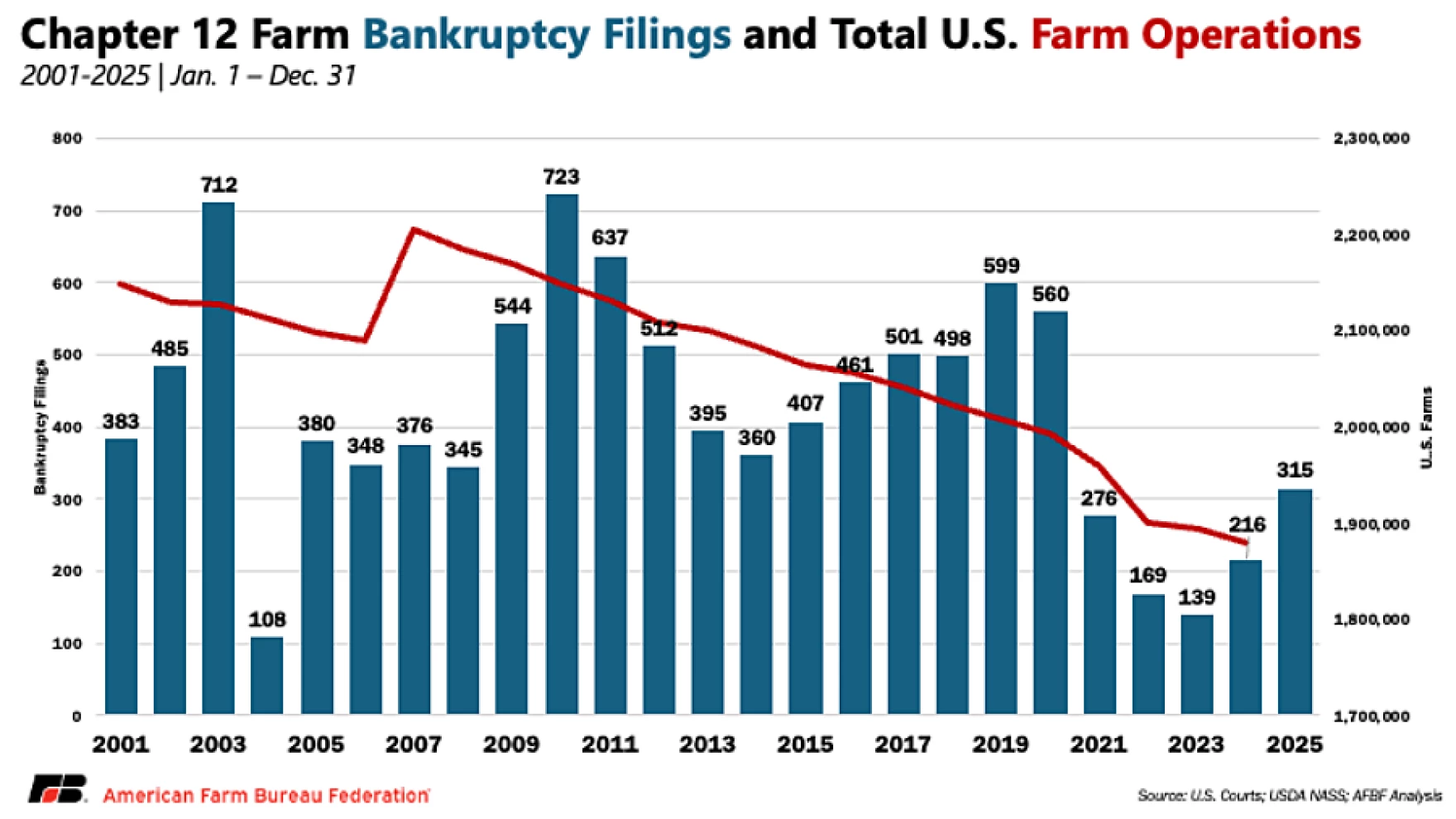
But Joe Mahon, an economist at the Federal Reserve Bank of Minneapolis, said earlier this month that farm bankruptcies could creep back up to those high levels.
“The commonality between what we're seeing right now and what we saw in the latter half of the last decade is sort of a prolonged period of strain on incomes starting to eat into savings,” Mahon said. “That ends up resulting in a financial picture that causes more producers to look into filing for bankruptcy.”
Click here to see more...