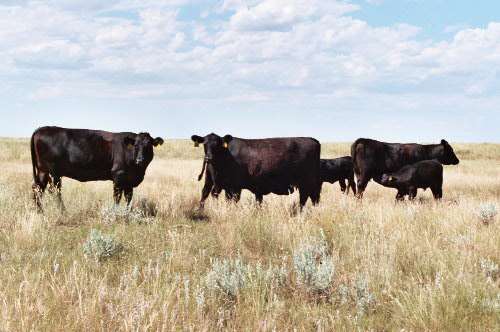
Don Close of Rabo AgriFinance, had some interesting things to say a couple weeks ago. We thought it was a topic worth revisiting. In case you missed it - here's Mr. Don Close on rebuilding the country's mama cow herd.
Expansion is finally here, says Don Close of Rabo AgriFinance, referring to the U.S. cow herd. But just how big is it expected to get?
“When this whole rally started back in late 2013-2014, my early number was between 32-33 million on beef cow numbers,” Close said. “With the econometric modeling that we’re doing, we’ve really revised that back and… in 2018-2019, we’re looking for a beef cow number of 31-31.2 million. We’ve trimmed that back pretty hard.”
The limitations, Close says, is not the availability of production space, but is rather a matter of expected consumption. He explained that if total per capita protein consumed is approximately between 200-205 lbs. with beef totals contributing to that range at around 54-56 lbs., then production eventually reaches a cap on per capita consumption. Further to his point, he noted that to date, U.S. beef has never exceeded 11 percent of production in exports on a volume basis.
“As we see it, the real lynchpin in the whole marketplace moving forward is we really have to focus and drive those exports in excess of 11 percent,” Close said. “That will ultimately drive what our cow herd limitations are, and profitability throughout the sector.
“That’s really where the make or break point going forward is, we’ve got to export.”
Click here to see more...