By Rebecca Vittetoe
Outside of northwest Iowa, which has missed more of the recent rains, field activity across the state has either been limited or brought to a halt due to the wet conditions. With much of the state waiting to get back into the field and get a start on planting, ISU Extension and Outreach field agronomists provide updates on what they are seeing and what’s happening in their respective regions across the state.
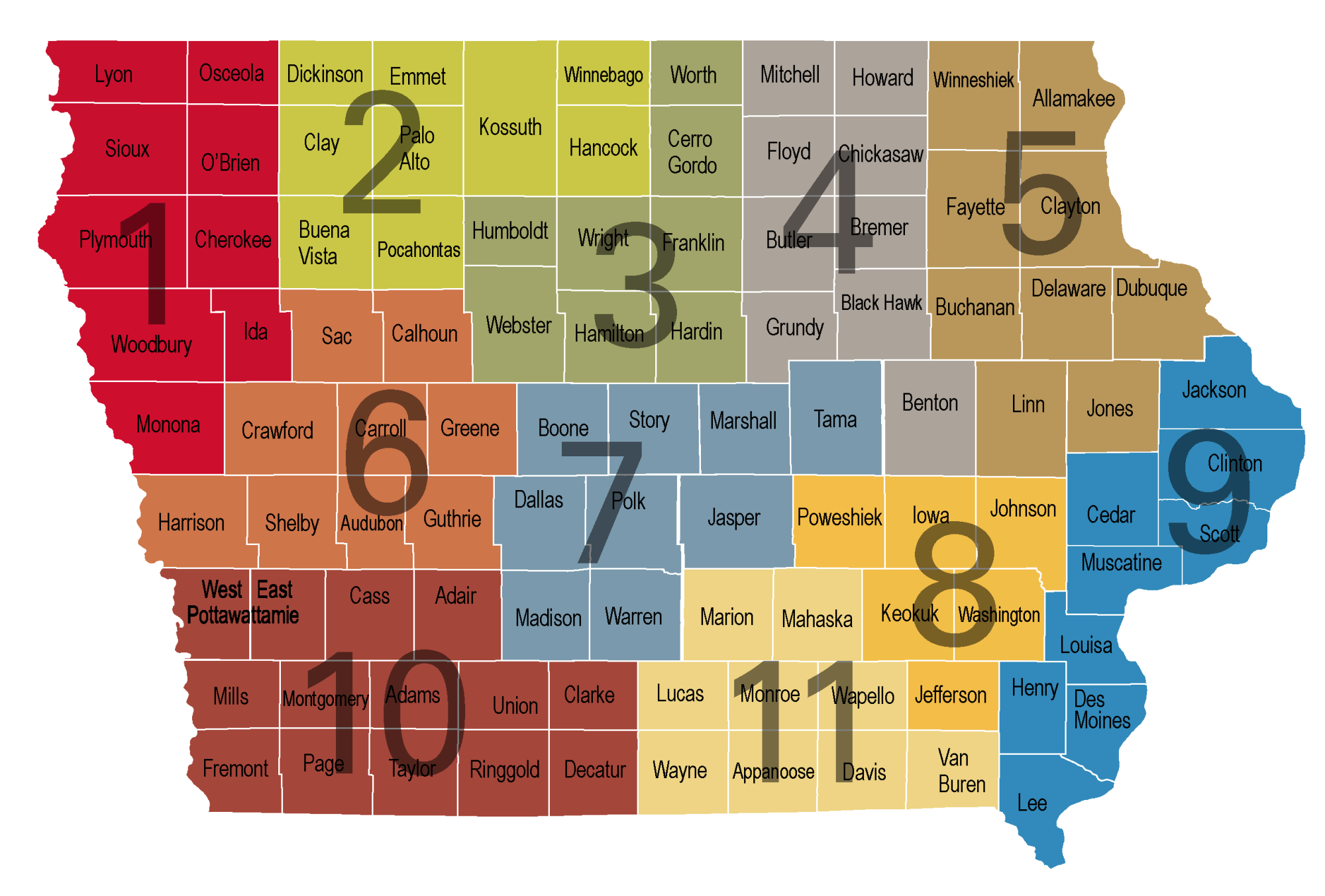
Cherokee, Ida, Lyon, Monona, O'Brien, Osceola, Plymouth, Sioux, Woodbury counties
“Spring is in full swing in northwest Iowa! Field activity over the weekend and beginning part of this week has included spring tillage and applications of dry fertilizer, nitrogen and chemical. Small amounts of both corn and soybeans have been planted. Soil conditions seem to be fit in most areas and farmers are taking advantage of the nice spring weather to get a head start on planting!”
Allamakee, Buchanan, Clayton, Delaware, Dubuque, Fayette, Jones, Linn, Winneshiek counties
“Over the past two weeks, most of Northeast Iowa has generally received around 3 inches of rainfall, with some isolated areas receiving up to 5 inches. Four-inch soil temperatures over the past week have continued to hover in the low to mid 40’s degree range. Soil temperatures are expected to increase to near 60 degrees for the next several days with warming temperatures. Prior to the rainfall, many producers were able to begin some initial field operations such as applying dry fertilizer, anhydrous ammonia, and pre-plant herbicide applications. Alfalfa fields, pastures, and cover crops are starting to green up, but growth has been slow due to cooler temperatures. Many winter annual weeds, such as henbit, are also starting to make their appearance. The majority of field calls over the past two weeks have centered around cover crop termination, soil temperatures and planting conditions, soil fertility, and pasture weed identification and management.”
Boone, Dallas, Jasper, Madison, Marshall, Polk, Story, Tama, Warren counties
“Central Iowa has received a boatload of rainfall in the past couple weeks, so despite overall warming air and soil temperatures, field work has been stalled. I know some fields got sprayed or – in some cases – planted before the rain, but most fields are waiting patiently for a drier forecast. Despite the lack of fieldwork, weeds and insects are still at work on the landscape. Most early-season weeds are emerged now, including ragweeds, woolly cupgrass, some foxtails, and lambsquarters. I expect many more will emerge early next week after the heat and rain. Black cutworms have been regular visitors to my trap in Polk County, though I have yet to catch a peak flight. Fields yet to be sprayed may need a quick scout prior to spraying to make sure any emerged weed species will be well-managed with the planned herbicide program. Fingers crossed for a good planting window in the next couple weeks!”
Source : iastate.edu