Farms.com Home   News

Study Shows Weak External Electric Fields May Protect Crops From Infection

Crops

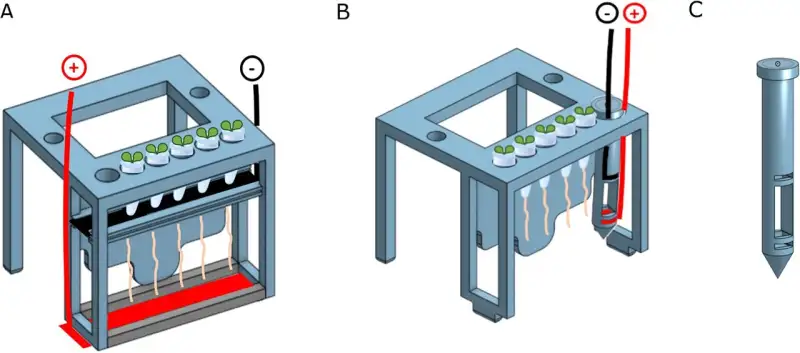
Research from Dr. Giovanni Sena's group in the Department of Life Sciences highlights an intriguing method to help protect plants from pathogen attacks using weak electric fields.

By placing electric fields near , the team showed it is possible to partially shield them from the harmful  of pathogens.

The approach works because certain spores, such as those of Phytophthora palmivora, which attacks  and nuts, are electrotactic—meaning they are naturally drawn to electric charges.

The findings are published in the journal Scientific Reports.

In earlier work, the same group quantified this electrotactic behavior, revealing how P. palmivora spores are attracted to positive electrodes.

Now, the group has shown that placing a device that generates such a field near the roots of plants like Arabidopsis and Medicago can significantly reduce the number of spores that attach to them.

Click here to see more...

Trending Video

Finding a Balance of Innovation and Regulation - Dr. Peter Facchini

Video: Finding a Balance of Innovation and Regulation - Dr. Peter Facchini

Regulations help markets and industry exist on level playing fields, keeping consumers safe and innovation from going too far. However, incredibly strict regulations can stunt innovation and cause entire industries to wither away. Dr. Peter James Facchini brings his perspective on how existing regulations have slowed the advancement of medical developments within Canada. Given the international concern of opium poppy’s illicit potential, Health Canada must abide by this global policy. But with modern technology pushing the development of many pharmaceuticals to being grown via fermentation, is it time to reconsider the rules?

Dr. Peter James Facchini leads research into the metabolic biochemistry in opium poppy at the University of Calgary. For more than 30 years, his work has contributed to the increased availability of benzylisoquinoline alkaloid biosynthetic genes to assist in the creation of morphine for pharmaceutical use. Dr. Facchini completed his B.Sc. and Ph.D. in Biological Sciences at the University of Toronto before completing Postdoctoral Fellowships in Biochemistry at the University of Kentucky in 1992 & Université de Montréal in 1995.