Ontario’s next provincial election is June 7
By Diego Flammini
News Reporter
Farms.com
The Ontario Federation of Agriculture (OFA) isn’t deviating from its election priorities despite the election of a new provincial Progressive Conservative (PC) party leader.
Doug Ford became the new leader of the Ontario PCs on Saturday, edging out Christine Elliott, the provincial patient ombudsman.
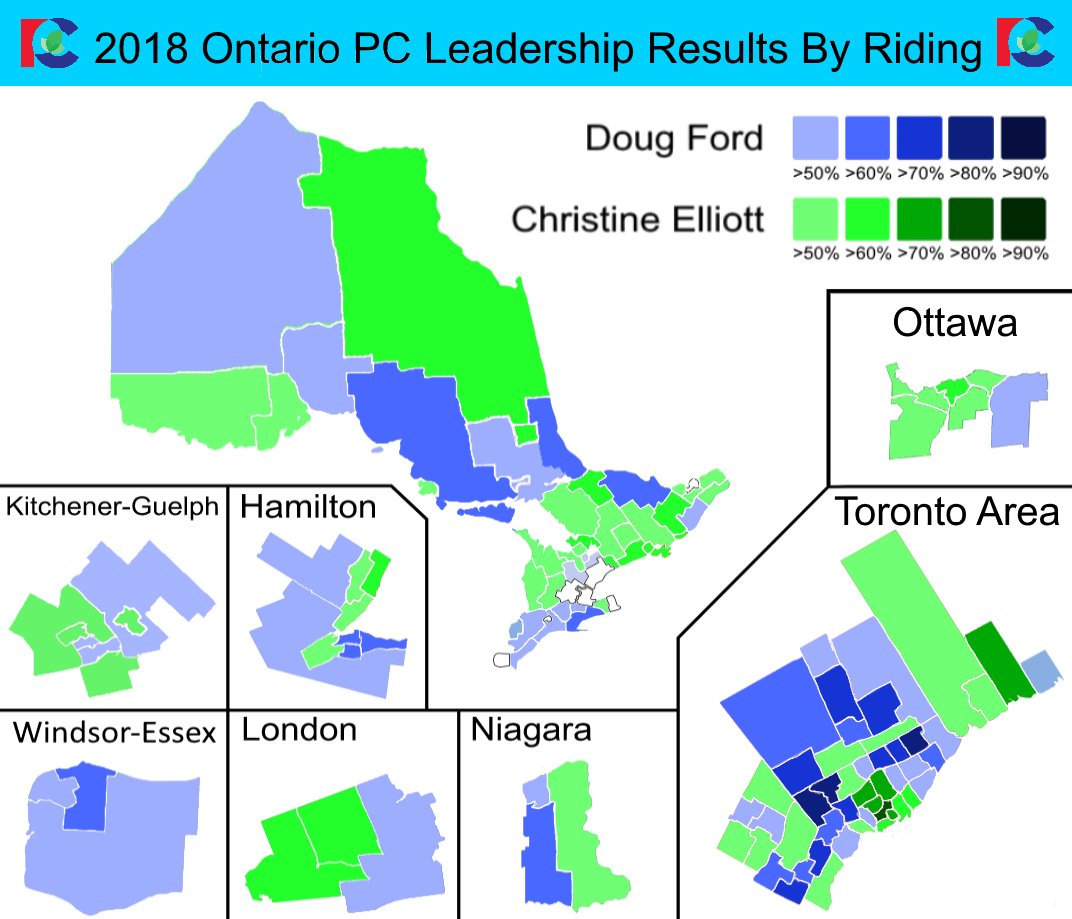
Riding breakdown of the PC leadership vote
As the province’s focus shifts to the June 7 election, the OFA remains confident in its Producing Prosperity plan.
“We’re going to stick with the prosperity campaign,” Neil Currie, OFA general manager, told Farms.com today. “I believe I heard Mr. Ford use the word prosperity in one of his speeches, so that bodes well.”
OFA’s plan is focused on economic development across rural Ontario. Areas of focus include a public investment into natural gas expansion, reliable internet capabilities and community services like hospitals and schools.
"Farms are no longer just mom and pop operations, they are multi-million dollar businesses," Emma Butler, a beef producer from Chatham-Kent, Ont., told Farms.com today. "Bad internet and poor road conditions are some of the challenges we face living in rural Ontario.
The OFA looks to bring that plan to Queen’s Park, regardless of the party in power.
“We’ll obviously have to see how the election goes, but with all parties we’re going to be working on economic development across rural Ontario to help the whole provincial economy,” Currie said. “We feel it’s a good plan and that it’s catching on.”
Some of Ford’s leadership campaign promises could benefit Ontario’s farm community.
As premier, Ford would cut the provincial carbon tax and welcome new business opportunities, he said during a Feb. 21 campaign stop in Peterborough, the home riding of current agriculture minister Jeff Leal, according to Global News.
The Conservatives would also listen to farmers’ concerns to help legislators develop sound policies for the agricultural community.
“I love these politicians who think they know more about agriculture than the farmers do,” Ford said on Feb. 21, according to Global News. “It’s the craziest thing I ever heard.”
Top photo: Doug Ford
Bruce Reeve/Flickr