Sally Barkwell and Leora Carothers received the honour
By Diego Flammini
Staff Writer
Farms.com
Two deserving Alberta women were inducted into the Alberta 4-H Hall of Fame.
Sally Barkwell, a registered dietitian from Peace River, and Leora Carothers from Stettler received the honour Monday while meeting with Alberta’s provincial ag minister.
The hall of fame recognizes people who have made contributions to 4-H through leadership, involvement with youth and motivating others.
“Congratulations to this year’s 4-H Hall of Fame inductees,” Devin Dreeshen said in a statement. “These individuals contributed countless hours to 4-H and embody its selfless spirit of volunteerism and community building. Thank you for your leadership with this important rural youth development program.”
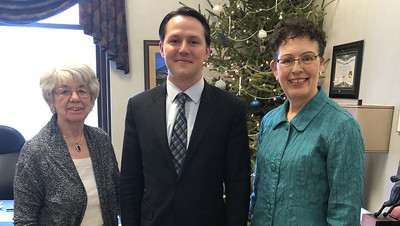
Agriculture and Forestry Minister Devin Dreeshen with Sally Barkwell and Leora Carothers.
For Barkwell, the induction is an early Christmas present.
"I was surprised and honoured when I found out," she told Farms.com. "I would watch people get inducted throughout the years and think about if it would ever be me one day. Well, now it is, and with it happening so close to Christmas, it's just wonderful."
Between the two inductees, they have more than 50 years of volunteer experience.
Barkwell has about 30 of those 50 years. Witnessing how young people grow into adults is what inspires her volunteer work, she said.
"I've seen the youth development in my own family with my own children," she said. "You watch them become confident young people and grow into adults who want to give back to the community."
Their dedication to 4-H made Barkwell and Carothers the right candidates for the hall of fame.
“They’re both longtime volunteers with 4-H,” Sharon Uhrich, a member of Alberta 4-H’s hall of fame selection committee, told Farms.com. “They’ve volunteered as parents, as project leaders, and as club leaders, and have given at the regional and provincial levels as well.”
Aside from a select number of individuals involved with 4-H who are paid by the provincial government, 4-H runs entirely on volunteer efforts.
“We’re all volunteers and we continue to volunteer because we see the value in the 4-H program and everything that it brings to communities in Alberta and across the country,” Uhrich said.
Farms.com has reached out to Carothers for comment on their induction.