The discovery marks the first time Cyclocephala forcipulata has been found in the U.S.
By Diego Flammini
Staff Writer
Farms.com
Federal ag specialists intercepted a rare pest at a port of entry.
On July 7, U.S. Customs and Border Protection (CBP) ag specialists at the Pharr cargo facility in Pharr, Texas., found a live beetle inside a shipment of jackfruit coming into the U.S. from Mexico.
USDA entomologists identified the pest as Cyclocephala forcipulata.
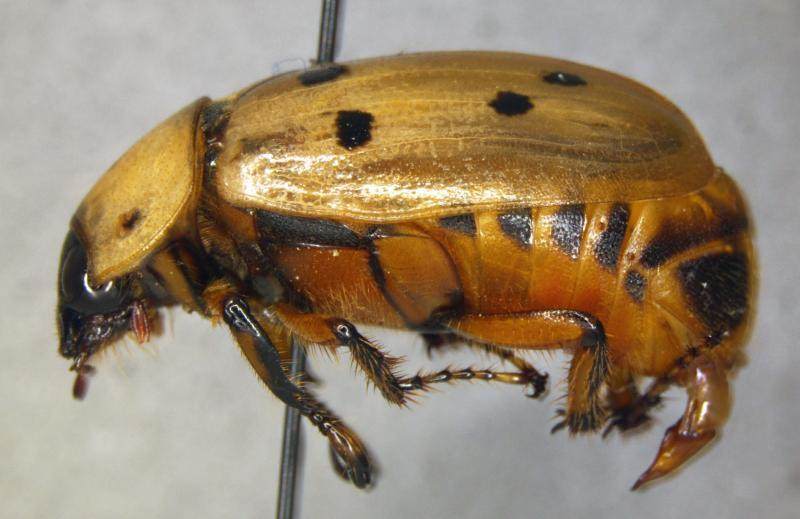
CBP photo
USDA entomologists also confirmed the discovery is the first time this pest has been found at any port of entry. CBP rejected the shipment and returned it to Mexico.
“Our agriculture specialists help protect American agriculture and contribute to the nation’s economic security by denying entry to invasive species not known to exist in the U.S.,” Carlos Rodriguez, port director for Hidalgo/Pharr/Anzalduas port of entry, said in a statement.
Cyclocephala forcipulata belongs to the scarab beetle family found in Mexico.
Larvae of these kinds of insects can cause crop damages as they feed on plant roots. Adults will eat the aerial parts of plants.
CBP employs more than 2,600 ag specialists who inspect thousands of shipments per year.
In the first three quarters of fiscal year 2021, border ag specialists found more than 4,000 shipments to be contaminated with plant, animal or other material, CBP data shows.
Most of the shipments originated in Mexico with California as the top U.S. destination for the shipments