Facility opened by Purdue University
By Diego Flammini
Assistant Editor, North American Content
Farms.com
Purdue University opened the Indiana Corn and Soybean Innovation Center, located at the Agronomy Center for Research and Education.
The facility will support field phenotyping – the process of measuring and analyzing observable plant characteristics. It’s the first field phenotyping facility on the continent.
There are similar facilities overseas in Germany and Holland.
With a growing population and increasing pressure on farmers, the facility can help growers meet global food demands.
“It will require truly revolutionary new technologies to feed a world of 9 billion people and to do so in a way friendly to the environment,” said Purdue president Mitch Daniels in a release. “The Indiana Corn and Soybean Innovation Center will play a big part in meeting this most urgent of global challenges.”
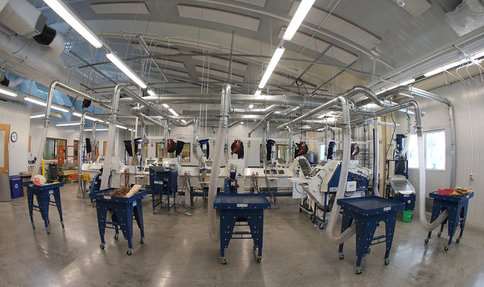
There are 13 threshing and shelling lines at the Indiana Corn and Soybean Innovation Center.
Photo: Purdue University/Tom Campbell
The $15 million facility included investments from local ag groups who understand the importance of being ahead of the curve when it comes to feeding the world.
“Indiana soybean farmers know that we need to think outside the box when it comes to new technologies,” said Joe Steinkamp, president of the Indiana Soybean Alliance and a farmer from Evansville. “We are excited to partner with Purdue University to place our farmers on the forefront of research that will develop technology to move agriculture forward.”