Brazilian market officially reopened on August 1, 2016
By Diego Flammini
Assistant Editor, North American Content
Farms.com
The first shipment of U.S. beef arrived in Brazil after the South American country ended the ban from 2003.
Brazil closed its borders to U.S. beef imports over bovine spongiform encephalopathy (BSE). Since then, Brazil imported most of its beef from Paraguay, Uruguay and Argentina.
Renewed access to the Brazilian market is a big step in the right direction for American beef producers, said recently-confirmed Secretary of Agriculture Sonny Perdue.
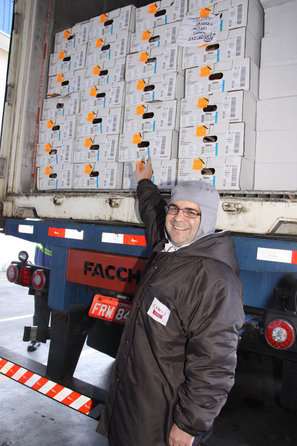
Diplomat Ricardo Zuniga with U.S. beef imports in Brazil.
Photo: USDA
“With Brazil’s large market reopened to the United States, U.S. beef exports are poised for new growth,” he said in a release. “I look forward to Brazilians getting the opportunity to eat delicious American beef because once they taste it, they’ll want more of it.”
But there are some conditions, according to a recent equivalence system established by both countries.
The U.S. can only export beef, beef products and beef offals sourced from cattle slaughtered and process on or after July 27, 2016. Any U.S. beef that has undergone radiation treatment is still ineligible for export to Brazil.
Though the first U.S. shipment only arrived on May 4, Brazil re-opened access on August 1, 2016.
“The Brazilian market offers excellent long-term potential for U.S. beef exporters,” then Agriculture Secretary Tom Vilsack said in a release.
Agricultural exports to Brazil in 2016 totaled $899 million, according to the Office of the United States Trade Representative.
Wheat ($316 million), prepared food ($54 million), dairy products ($47 million), cotton ($47 million), and feeds & fodders ($42 million) were the top items the U.S. exported to Brazil.
Agricultural imports from Brazil totaled $3.3 billion in 2016.
Coffee, unroasted ($1.1 billion), fruit and vegetable juices ($323 million), tobacco ($296 million), red meats ($288 million), and raw beet and cane sugar ($132 million) were the top ag items the U.S. imported from Brazil.