One dairy cow and multiple pieces of equipment lost in blaze
By Diego Flammini
Assistant Editor, North American Content
Farms.com
A barn fire at a dairy farm in Pennsylvania’s Pine Creek Township caused an estimated $500,000 in damages.
Firefighters from more than 10 stations, including Avis, Woolrich, Dunnstown, Wayne Township and Jersey Shore, responded to blaze on Sulphur Run Road, which broke out just after 9:30 p.m. on April 5.
“I could see the fire from my house, so I called for a second alarm right away,” Ken Leitch, deputy fire chief for the Avis Volunteer Fire Department, told the Williamsport Sun-Gazette.
Ben and Kim Carson own the farm. They lost a tractor, a skid steer, a planter and one cow from their herd of 60.
“I tried to get the last one out…” Kim told The Express. “But it was too hot. I just couldn’t do anything.”
Despite these losses, the silos still stand, the remaining 59 cows are safe, and both the milk barn and house are fine.
“There’s a lot of positives here,” Kim said.
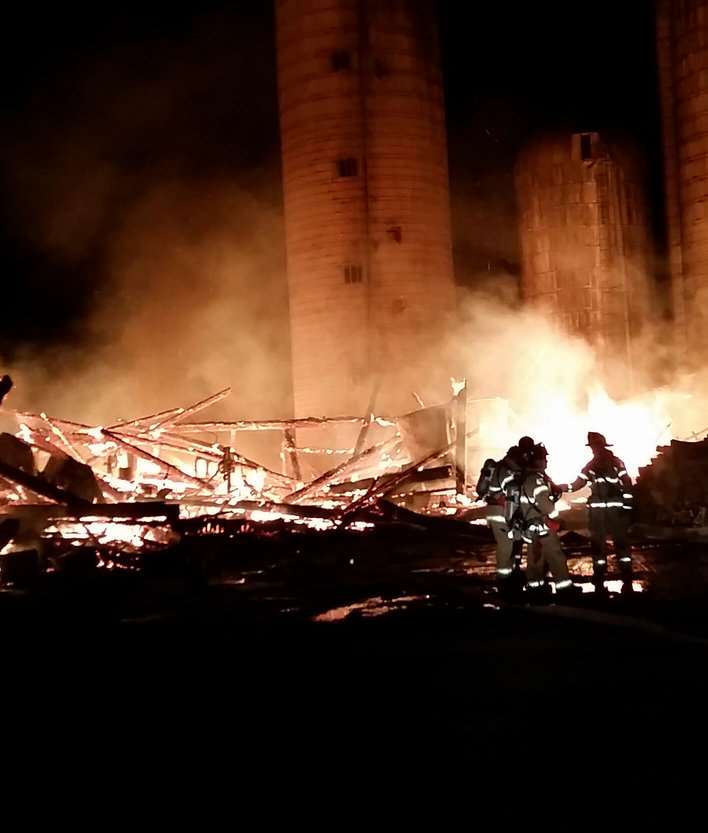
Firefighters battle a fire at a dairy farm on Sulphur Run Road.
Photo: Philip Holmes/Sun-Gazette
Ben told The Express an older skid steer may have started the fire. He kept it plugged in overnight to keep it warm.
When word of the fire reached the local community, it rallied to help the farmers save as much as they could.
“I can’t believe it…all the people who turned up…running through the mud to help get the cows (to safety),” Kim told The Express.
Other farmers helped move the displaced cows back into the barn Thursday morning and milked them on schedule.
The fire caused an estimated $500,000 in damages, including approximately $400,000 worth of equipment destroyed.