Mexico will continue to be an excellent export market
By Denise Faguy
Farms.com
According to Farms.com Risk Management Chief Commodity Expert, Moe Agostino, pork has been the fastest-growing meat in Mexico over the last five years.
Despite the fact that Mexico’s own pork production is expected to increase by 4.6%, based on current private sector investment in the country, “Mexico is expected to maintain a strong volume of import as to satisfy domestic demand,” says Agostino.
U.S. pork exports to Mexico ended 2022 very strongly, setting a volume record in December on the way to a record-breaking year.
Mexico, like many counties, is experiencing lower chicken and egg availability. According to Agostino, this shortage should continue to support domestic hog prices and also allow for strong meat imports from the US and Canada.
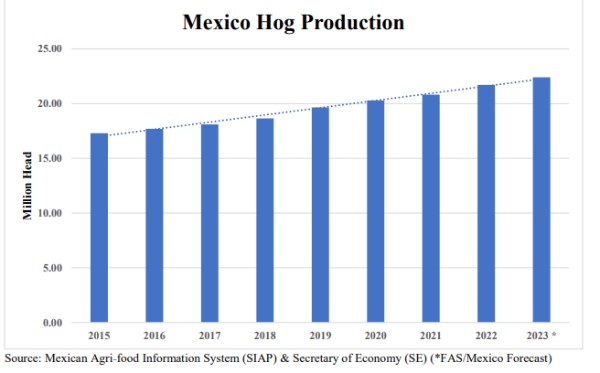
Mexico’s domestic hog crop production should increase by +3.2% year over year, reaching 22.4 million head in 2023.
2023 Mexico pork imports should decrease by -2.7% to 1.24 MMT in 2023, from the 2022 estimate of 1.28 MMT, but that will be offset by domestic pork consumption – though the rising cost of pork is expected to slow that growth down.
Agostino says Mexico will continue to be an excellent export market for the US and Canadian hog industries.