Three organizations created signs to warn snowmobilers where they’re going
By Diego Flammini
Staff Writer
Farms.com
Two ag organizations and one recreational group worked together to devise a plan to warn snowmobilers when they’re venturing onto cropland.
The Saskatchewan Snowmobile Association partnered with Farm Credit Canada (FCC) and the Saskatchewan Crop Insurance Corporation (SCIC) to create signs farmers can place on their property to alert snowmobilers that a crop is still in the ground.
This year is the second time the three groups have organized the sign campaign.
It’s a small and simple gesture to help snowmobilers enjoy the winter without causing harm to crops, said Chris Brewer, CEO of the Saskatchewan Snowmobile Association.
“It’s a very important matter to us to get this information out to snowmobilers and to support the important producers in our province,” he told Farms.com.
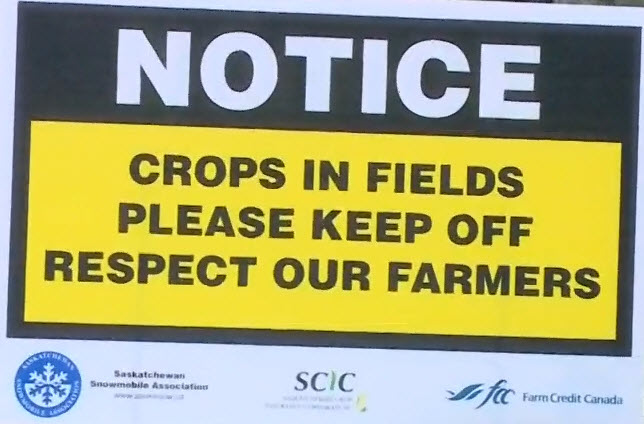
FCC will have signs available starting the week of Nov. 25 at all its regional offices in the province. SCIC should have signs available around the same time, or producers can contact the snowmobile association for information on where to get a sign, Brewer said.
Producers hope the signs will be enough to keep snowmobilers away from their crop fields.
“I hope (snowmobilers) will be respectful and understand the difficult harvest farmers have had, and that there’s still livelihoods at stake,” Wayne Truman, a grain producer from Redvers, Sask., told Fams.com.
“If the crop is in swaths, the machine goes over and there’s the potential that it shells the swaths out,” he said. “If the crop is being straight cut, the snowmobile could flatten the crop down or break stems depending on the crop. It’s just not a good thing.”