Net migration fuels rural population growth while natural population losses begin to narrow
The rural population of the United States continues to edge upward, marking another year of growth after a decade of stagnation and decline.
As of July 2024, rural areas were home to 46.2 million people, accounting for 13.6 percent of the total U.S. population. Between July 2023 and June 2024, the rural population increased by 0.29 percent, according to recent estimates. While this growth lagged behind urban areas, which saw a 1.08-percent increase, it represented a continuation of a trend that has emerged since 2021.
The primary driver behind rural population growth remains positive net migration, meaning more people are moving into rural areas than leaving them. This inflow has been strong enough to offset ongoing population losses caused by natural change -- deaths exceeding births.
Although rural deaths continue to surpass births, the gap between the two narrowed in 2024. This reduction helped soften the overall population losses from natural change and contributed to the continued growth trend seen in rural communities.
For much of the last decade, rural population numbers remained flat or declined, largely due to weak migration and aging demographics. Since 2021, however, rural areas have seen steady gains, supported by consistent positive net migration and gradual improvements in natural population balances.
The impact of these factors became particularly noticeable in recent years. Rural population growth more than doubled in 2023 compared to 2022, rising from 0.14 percent to 0.37 percent. While the growth rate moderated slightly in 2024, it remained positive and historically significant for rural America.
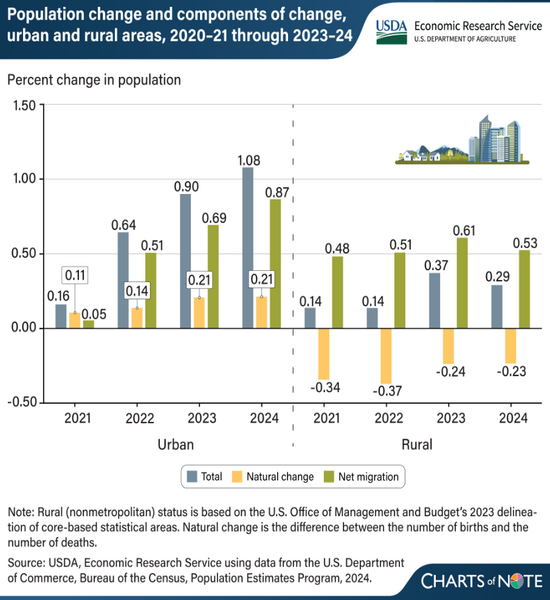
Urban areas continue to outpace rural communities in overall population growth, benefiting from both positive net migration and natural population increases.
Historically, cities and suburbs have experienced stronger growth due to higher birth rates and greater economic opportunities. Even so, the recent momentum in rural population trends highlights changing dynamics in where Americans choose to live.
For agricultural communities, the sustained growth offers both opportunities and challenges. An increase in population can support rural businesses, schools, and services, while also placing new demands on housing, infrastructure, and land use. For farmers and rural landowners, these shifts may affect everything from local labour availability to development pressure on farmland.
The continued appeal of rural living is often tied to factors such as housing affordability, quality of life, remote work flexibility, and access to open space.
These trends gained traction during the early 2020s and appear to be persisting, even as broader economic conditions evolve.
While rural population growth remains modest compared to urban centres, the data signals a meaningful departure from the previous decade of limited change.
If positive migration trends continue and natural population losses keep narrowing, rural America may see further stabilization or gradual growth in the years ahead.
For those who live and work in rural communities, the latest numbers underscore an important shift: rural areas are not only holding their ground, but slowly gaining momentum once again.
Photo Credit: USDA