John Cote and Barb Stefanyshyn-Cote won best cask gin
By Diego Flammini
Assistant Editor, North American Content
Farms.com
A husband and wife team of grain farmers from Saskatchewan took home honours for best cask gin at the World Gin Awards in London, England.
Farms.com caught up with John Cote, who along with his wife Barb Stefanyshyn-Cote, started Black Fox Farm and Distillery two years ago in Saskatoon. He discusses the perfect variety of triticale to make an award-winning gin.
Farms.com (Farms): How does it feel to have a product recognized worldwide?
John Cote (JC): Our expertise is in farming and not distilling so there are some nights you lay awake and wonder “holy crap what have we gotten ourselves into?” But then stuff like this comes along and makes your day go by a little better.
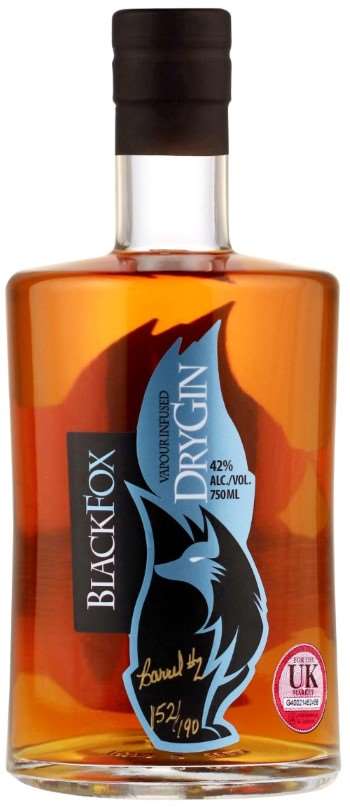
Farms: Your product won the best cask gin award. What is cask gin?
JC: It’s gin that’s been aged in a barrel (and) by law you can’t make an age claim on it. We age ours between five and eight months.
Farms: How long have you and your wife been involved with agriculture? How large is the farm?
JC: Since we both left the University of Saskatchewan in the late 1980s to take over the family farm. In 2001, (Barb) was awarded a Nuffield Scholarship and we were named Saskatchewan’s outstanding young farmers. And I was chosen to be part of the Canadian Agricultural Lifetime Leadership Program, a joint effort by the University of Laval and University of Saskatchewan. They tried to take a group of leaders in the industry and do some intense training.
(Barb) has a master’s degree in animal nutrition and I have a degree in soil sciences.
Right now the farm is about 100 acres. We practice horticulture on 40 acres and (grow) grains on 60. Our main production is cut flowers.
Farms: What variety of seed is used to make the gin? How does that variety help create a high-quality product?
JC: We’re using a triticale and the variety is called Brevis. For us, it’s the perfect mix because triticale is a cross of wheat and rye. (This variety) gives us a little bit of extra fermentable starch (than) what we would get from rye. It handles better in the fermentation process.
Farms.com extends its congratulations to John and Barb!
World Gin Day is celebrated on June 10.